
At Bridge, technology isn’t viewed as an end in itself. It’s a tool that makes corporate language training more personalized, more measurable, and more closely aligned with the real needs of learners, HR teams, and organizations.
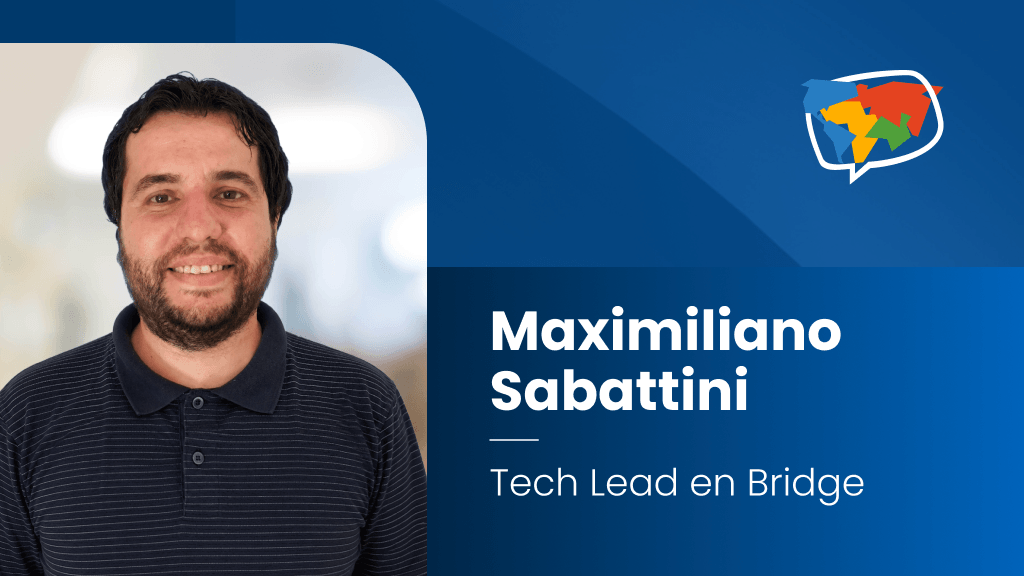
That philosophy is at the core of Maximiliano’s work. As Tech Lead at Bridge, he has spent more than a decade helping shape the company’s technology strategy. With over 20 years of experience in the technology industry, Maximiliano began his career as a full-stack developer before specializing in complex software solutions, particularly systems integration and connected platforms.
“What has always attracted me to this work is the opportunity to solve real problems with technology—not technology for its own sake, but as a tool that enables something greater.”
From Technical Architecture to Real Business Impact
As Tech Lead, Maximiliano’s role spans both technical leadership and strategic thinking.
On the technical side, he makes architectural decisions, ensures code quality, and develops integrations that keep the platform reliable, scalable, and secure. But his work goes far beyond engineering.
A key part of his role is understanding how every technical decision ultimately affects learners’ experiences and helps corporate clients achieve better learning outcomes.
“That connection between technical decisions and real-world impact is what motivates me the most.”
This perspective is especially important in today’s corporate learning environment, where language programs are expected to deliver far more than classes. Organizations need visibility, measurable progress, and meaningful data that supports business decisions.
What It Really Means to Be Tech-Enabled
For Maximiliano, calling Bridge tech-enabled isn’t simply about using technology. It’s about a mindset.
“Tech-enabled isn’t a slogan—it’s a philosophy. It means technology exists not to impress people, but to enable experiences that would otherwise be impossible or very difficult to scale: learning that’s more personalized, measurable, and consistent.”
In practice, this means using technology to strengthen the elements that matter most in language learning: sound pedagogy, learner experience, expert guidance, and meaningful human interaction.
Technology doesn’t replace teachers or the learning process. It empowers them.
Solving the Real Challenges of Corporate Language Training
Corporate language programs face unique challenges.
Organizations need to monitor the progress of hundreds—or even thousands—of learners, personalize learning experiences without sacrificing scalability, reduce friction across digital platforms, and provide HR teams with meaningful data about progress and return on investment.
These are exactly the kinds of problems Bridge’s technology is designed to solve. The goal is to create an experience that is more transparent, actionable, and valuable for both learners and HR teams.
Learners gain greater visibility into their own development, while organizations receive the insights they need to make informed learning decisions.
“We spend a lot of time improving visibility so that both learners and corporate clients have clear, actionable information about progress.”
Smarter Technology Without Losing the Human Element
Today, Bridge’s technology team is focused on making the platform more intelligent, connected, and data-driven.
A significant part of that work involves using data to improve decision-making—from enhancing the learner experience to helping organizations manage their language programs more effectively.
The team is also actively exploring how artificial intelligence can be integrated in meaningful and responsible ways.
For Maximiliano, AI isn’t about adding trendy features. It’s about identifying where it genuinely creates value—whether through greater personalization, better decision support, or more effective learning experiences.
“It’s an exciting time to be working in educational technology.”
Building Technology That Makes a Difference
After more than two decades in technology, what motivates Maximiliano most is working on solutions that have a tangible impact on people’s lives.
From the outside, corporate language training may appear highly technical: platforms, proficiency levels, dashboards, and reports.
But behind every learning program are people seeking to communicate more confidently, unlock new career opportunities, and grow professionally.
“You’re helping someone communicate more effectively, access new opportunities, and build greater confidence. Knowing that technology can contribute to that—at scale—is something I genuinely find meaningful.”
Looking Ahead: More Adaptive, More Measurable Learning
Maximiliano believes language learning technology will become increasingly adaptive. Future learning systems will better understand each learner’s pace, context, and goals, allowing learning journeys to adjust dynamically to individual needs.
He also sees data playing an even greater role in helping organizations demonstrate the real business impact of corporate learning programs—particularly in an area where many companies still struggle to measure results effectively.
The challenge, he says, will be continuing to innovate without losing what makes language learning successful in the first place: Its human dimension. Because at Bridge, technology isn’t designed to replace that experience. It’s designed to make it clearer, more scalable, and more effective.