
In many organizations, corporate language training begins with a clear objective: improving team communication, preparing employees for more global roles, or strengthening the skills needed to operate in international markets.
But once a program is underway, another equally important question arises:
How do you know if it’s actually working?
For HR and Learning & Development teams, managing a language program involves far more than coordinating classes. It means understanding each team’s starting point, identifying skill gaps across roles and departments, monitoring participation, supporting learners throughout their journey, and demonstrating measurable results to the organization.
This is where technology stops being a supporting tool and becomes a core part of the learning strategy.
Learning a Language Takes Time. Managing Progress Requires Visibility.
Language learning is neither immediate nor linear. Every learner progresses at a different pace based on factors such as prior experience, motivation, learning environment, native language, and consistency of practice.
Progress is also cumulative. Moving from one proficiency level to the next requires sustained exposure, guided practice, and ongoing support. That’s why, in a corporate environment, simply knowing how many classes someone attended—or how many employees are enrolled—isn’t enough.
To make better decisions, HR needs visibility beyond attendance.
They need to understand employees’ current proficiency levels, identify which teams require additional support, recognize communication gaps across different roles, and track progress over time.
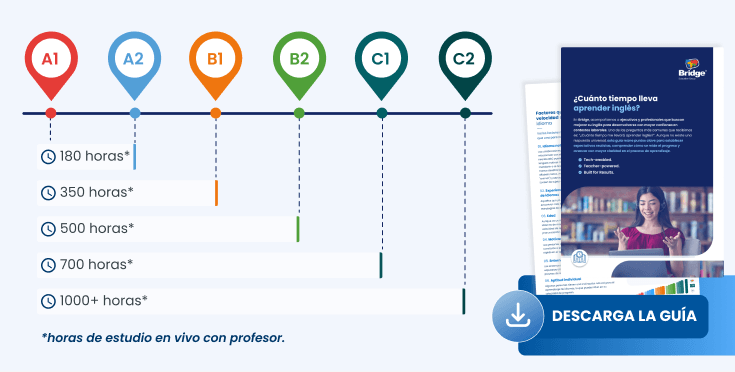
Want to better understand how long it takes to improve English proficiency and what factors influence progress? Read our guide: How Long Does It Take to Learn English?
A Platform Built for Corporate Language Training
Bridge developed its own learning platform to manage the entire corporate language learning lifecycle—from initial assessment through program delivery, measurement, and reporting.
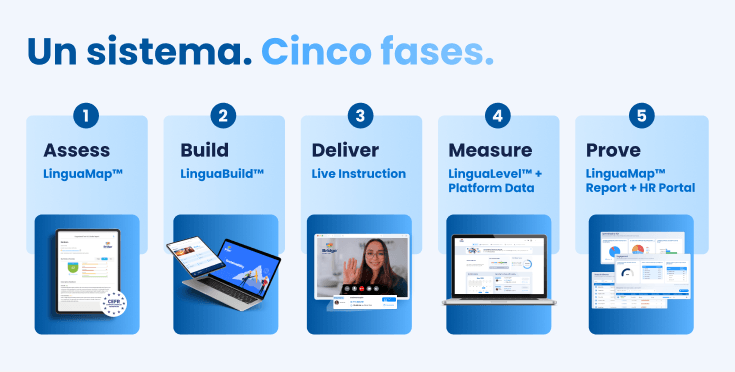
This creates a connected learning ecosystem. Organizations can assess their starting point, build a learning experience tailored to their teams’ needs, deliver the program, measure progress, and consolidate results into meaningful insights that HR can review and share across the business.
The goal isn’t simply to use technology to manage classes.
It’s to use technology to transform language training into a process that is transparent, measurable, and strategically managed.
From Assessment to Learning Strategy: Starting with Data, Not Assumptions
Every successful learning program begins with a clear understanding of where learners are today.
At Bridge, that starting point is LinguaMap™, a diagnostic framework that helps organizations understand language proficiency across roles, departments, and business functions.
Using multiple sources of information—including needs mapping, self-assessment, and proficiency testing through LinguaLevel™—LinguaMap™ provides a comprehensive picture of an organization’s current language capabilities and where training can generate the greatest impact.
For HR, this changes the conversation.
Instead of designing programs based on assumptions, organizations can make informed decisions about which groups to prioritize, which skills to develop, how proficiency varies across the organization, and how language learning connects directly to business goals.
Content That Reflects Real Work
Technology also makes learning more relevant.
With LinguaBuild™, Bridge creates personalized learning content based on each organization’s real business context—including its industry, products, services, internal communication, and everyday workplace scenarios.
As a result, employees practice English that directly relates to the conversations, documents, and situations they encounter on the job.
For HR and L&D leaders, relevance matters because it directly influences learner motivation.
When employees see a clear connection between the learning experience, their role, their industry, and their professional goals, they’re more likely to stay engaged and apply what they learn in their day-to-day work.
A Better Experience for Learners—and for HR
A corporate learning platform must successfully serve two audiences at once.
For learners, it should provide an organized, flexible experience that supports their goals through easy access to classes, practice opportunities, progress tracking, and learning resources that keep them engaged.
For HR and L&D, it must provide visibility.
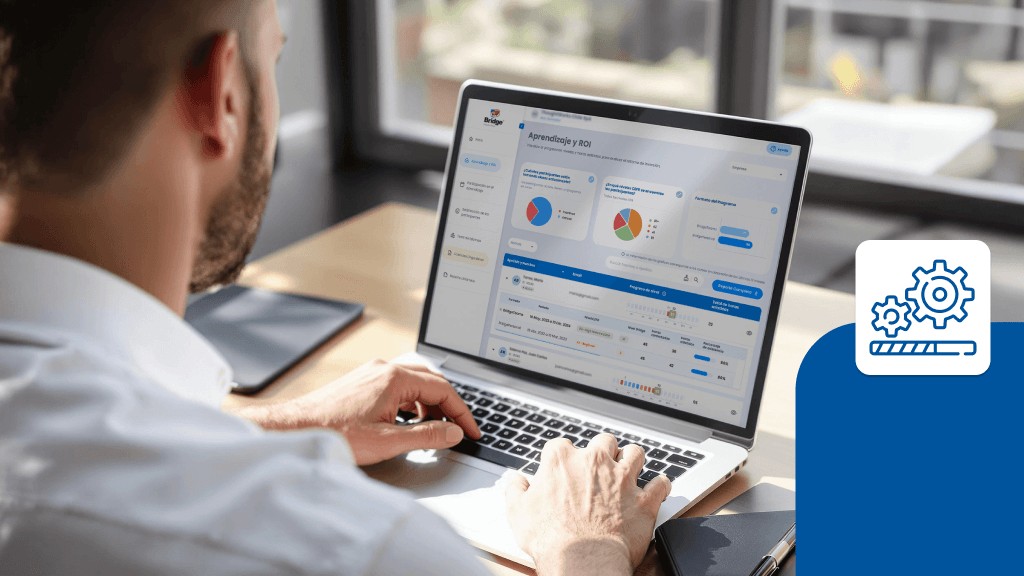
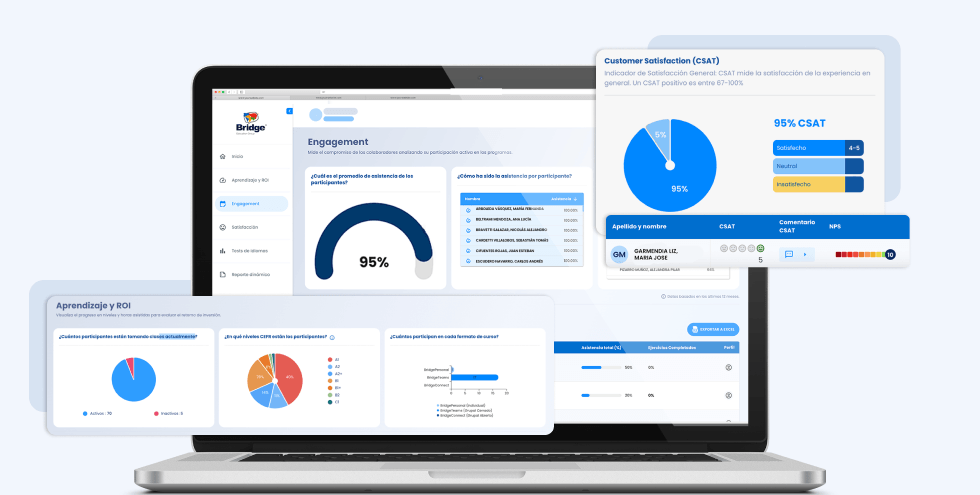
Bridge’s HR Portal gives learning leaders real-time access to key program data, including participation, proficiency progress, learning outcomes, satisfaction, and potential engagement or completion risks.
This visibility means HR teams don’t have to wait until the end of a program to understand what’s happening.
Instead, they can identify opportunities early, make informed decisions, and better support learners throughout the learning journey.
Technology Backed by People
Technology alone isn’t enough to sustain a successful corporate learning program.
At Bridge, the platform is supported by dedicated Customer Success and Learner Experience teams who monitor the learner journey, encourage participation, help interpret program data, and partner with HR to make informed decisions.
This human support is essential because data only creates value when it leads to action.
A dashboard may reveal a trend, but experienced learning specialists help organizations understand what those insights mean, determine which adjustments are needed, and continuously improve the learner experience.
Technology doesn’t replace human partnership.
It strengthens it.
Measuring Progress to Demonstrate Impact
One of HR’s greatest challenges is demonstrating the value of learning initiatives.
That’s why Bridge connects initial assessments with ongoing measurements and comprehensive program reporting.
The goal is to replace subjective impressions with objective evidence: proficiency growth, participation, learner satisfaction, consistency, and measurable outcomes across teams, roles, and regions.
This shifts the conversation from: “We delivered classes.” to “We can clearly demonstrate what changed.” And that distinction matters. Because when learning can be measured, it can also be improved, justified, and scaled.
From Training Program to Learning System
Corporate language training delivers greater value when it is managed as a connected system rather than a series of isolated classes.
A system that assesses, builds, delivers, measures, and proves results.
That’s the role technology plays at Bridge: providing structure, visibility, and continuity throughout the learning journey.
When that technology is combined with expert teachers, personalized content, and dedicated human support, language training becomes more than an educational experience—it becomes a strategic business capability for HR.
Because learning English takes time.
Understanding how your organization is progressing shouldn’t.