

In 2026, companies will continue evolving toward hybrid work models, where both online and in-person interactions are essential for success. In this environment, English will not only be a communication tool but also a strategic key for global collaboration and professional growth. This article offers practical strategies and tips to help you master English in a hybrid work environment and be prepared for future demands.
1. The Importance of English in Hybrid Environments
Why mastering English will be critical in 2026
In an increasingly globalized and remote workplace, English will be the common language for most professional interactions. In hybrid environments—where some team members are in the office and others work remotely—effective communication in English will be essential to maintain smooth collaboration.
Practical tip:
If your team or clients speak different native languages, fluent communication in English will make interactions faster, more efficient, and less prone to misunderstandings. Practicing in real-life scenarios (such as work calls or presentations in English) will better prepare you for hybrid environments.

2. Learning Strategies to Improve English in a Hybrid Work Setting
Develop specific skills for virtual meetings, presentations, and emails
In hybrid contexts, virtual meetings and written communication—especially email—have become the most common forms of interaction. To stand out in these formats, you need to practice:
-
English for virtual meetings: Improve your ability to express ideas clearly and concisely during video calls or team presentations.
-
English for emails: Strengthen your skills to write effective, professional emails in English.
-
Specialized vocabulary: Become familiar with project- and industry-specific vocabulary to communicate with greater precision and professionalism.
Practical tip:
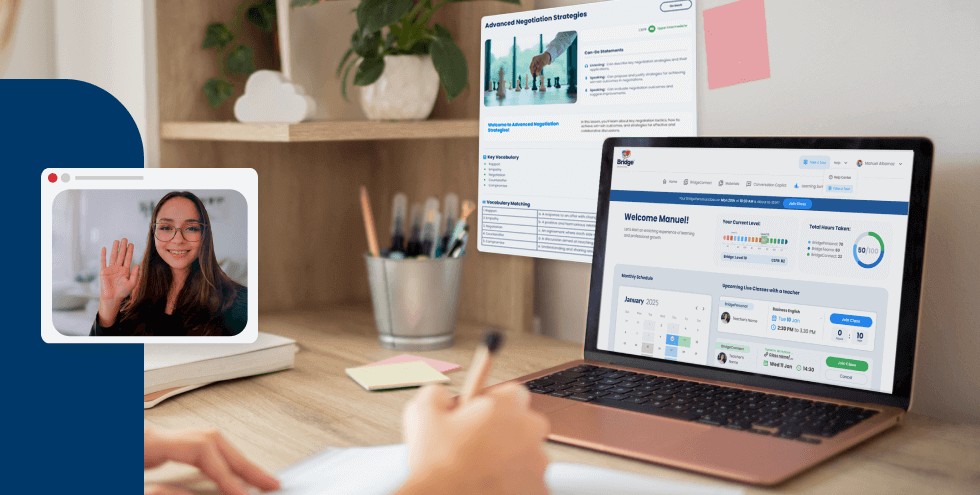
A great way to build these skills is by creating meeting simulations with teammates or classmates. In addition, using platforms like BridgeConnect allows you to practice in real contexts (virtual presentations, negotiations, etc.), which is essential for hybrid work environments.
3. Keys to Improving Pronunciation and Fluency
Speaking with confidence in a hybrid environment
Fluency and clear pronunciation are essential, especially in calls and video conferences where audio quality and accent differences can make understanding more difficult. Consider these strategies:
-
Active listening: Pay close attention to native speakers to improve listening comprehension and pronunciation.
-
Pronunciation practice: Use AI-powered apps or tools that provide instant feedback on pronunciation.
-
Recording and repetition: Record your presentations or spoken responses in English, listen back, and adjust your mistakes.
Practical tip:
Make your English presentations more effective by practicing in front of a camera. This simulates a real work video call and helps you fine-tune your pronunciation and fluency.
4. Using Digital Tools to Learn English in Hybrid Work
Apps and platforms to improve professional English
Technology is your ally in learning English more efficiently. AI-based tools and online learning platforms can personalize your learning experience and adapt it to your needs. Useful tools include:
-
Language platforms which enable live and asynchronous practice in a hybrid environment.
-
Pronunciation correction apps that use AI to provide immediate feedback.
-
Specialized courses focused on professional English, tailored to the demands of hybrid corporate environments.
Practical tip:
Some platforms offer simulations of real workplace scenarios, helping you become familiar with everyday situations in a hybrid environment.
5. Preparing for 2026: Projecting Your English Learning
How to keep improving your English as we move toward 2026
To maintain your competitive edge and adapt to hybrid work environments, continuous practice is key. Consider these strategies:
-
Review your progress regularly and adjust your goals. Ask yourself: Have I improved my presentations? Am I more efficient in my emails?
-
Participate in international forums or professional communities in English to practice in a more interactive way.
-
Invest in continuous learning: from in-person courses to online platforms like Bridge—never stop learning.
Practical tip:
Make English part of your daily routine. Dedicate just 20–30 minutes a day to practicing English in professional contexts, such as reading articles or watching videos related to your field.
The Future of Professional English: Start Preparing Today
In the hybrid work environment of 2026, mastering English will be more important than ever for career advancement. By following these practical strategies, you’ll not only improve your language skills but also prepare yourself for the challenges of a globalized professional world. Start today—and make English one of your most powerful tools for success in hybrid work.