Bridge TEFL
  Expert Series Webinars
  BridgeUniverse Blog
  TEFL Jobs
  Language Training
  About Bridge




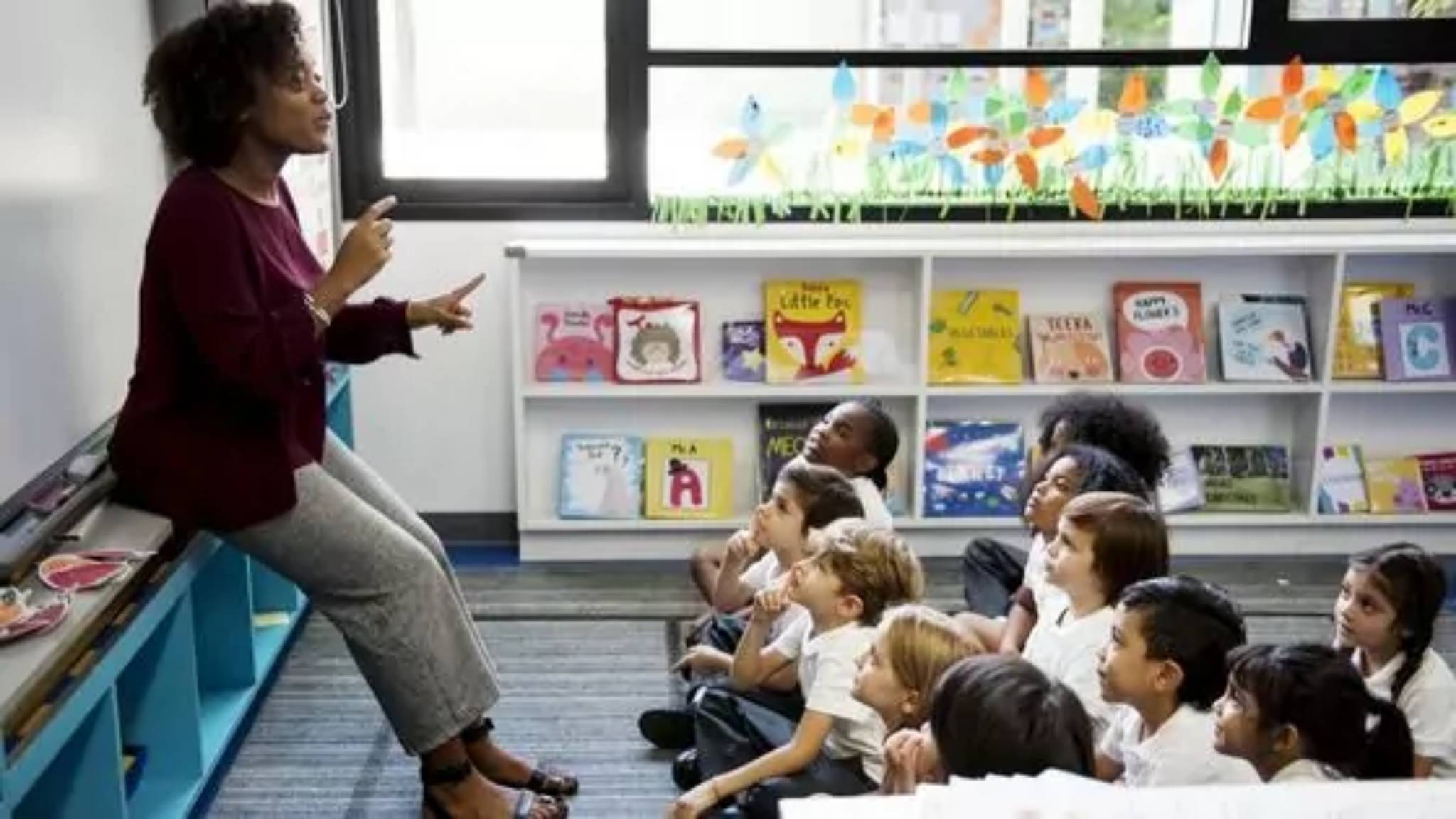
Students can learn the grammar rules and still go silent when it is time to speak. TPRS addresses exactly that problem. The method, short for Teaching Proficiency Through Reading and Storytelling, treats a second language as something students absorb through stories they help build, rather than as a set of rules they memorize and then produce under pressure.
TPRS is a method for acquiring a second language naturally and effectively. Teachers can use it with students of all ages, and it is especially effective with young learners because it is engaging. Below, we cover where TPRS came from, what the research shows about its results, the three phases that structure a lesson, and activities you can take into your own classroom.
If you’re new to teaching, you’ll want to get initial training and qualification with a TEFL certificate. You can explore our online TEFL courses to get started!
What is TPRS in language learning?
What does TPRS stand for in education?
TPRS (Teaching Proficiency Through Reading and Storytelling) is a second language acquisition method that uses storytelling as a teaching tool. Teachers and students in a TPRS class co-create stories in the target language to support language acquisition.
What does this teaching method entail?
Language acquisition refers to the largely intuitive process through which a learner absorbs a language. Language learning works the other way: students actively study new words and grammar rules, and they rely on memorization and practice to assimilate a new language.
Language acquisition relies on exposure to the target language and on repetition. It also relies on contextualization, which means the teacher presents language in a context that makes unknown words and grammar understandable. The process is organic, and it mimics the way children learn their first language.
A TPRS class resembles a conversation more than a lesson. Teachers who want to improve their students’ fluency can benefit from this ESL teaching method.
Learn about 8 ESL methodologies and get sample activities with the free guide to
Teaching English Learners: Popular ESL Learning Methodologies
downloadWhere does TPRS come from?
Blaine Ray created the TPRS method in the late 1980s. Ray taught Spanish and wanted to help his students attain fluency. He already knew the TPR (Total Physical Response) and Comprehensible Input (CI) approaches to teaching.
James Asher developed TPR in the mid-1960s. In that approach, the instructor ‘contextualizes’ the new vocabulary by pointing to objects or mimicking specific actions, which makes the new words understandable.
The CI approach, developed by Stephen Krashen, holds that students need two things to acquire a new language: a large amount of exposure to linguistic input, and input that is mostly comprehensible. Input that students cannot understand and cannot guess from the context of the communication does nothing to advance their fluency.
Ray used TPR extensively, and he soon realized that TPR works well for concrete words but falls short with abstract terms and concepts. He developed TPRS to bring TPR and the theory of CI into one teaching method to overcome their limitations.
TPRS first stood for Total Physical Response Storytelling. The acronym later became Teaching Proficiency Through Reading and Storytelling, which reflected the evolution of the method and its inclusion of reading as an important learning tool.

What are the benefits of TPRS?
TPRS language learning has increased in popularity since its inception. Teachers give several reasons for that popularity:
-
It produces tangible results.
-
It is engaging and fun for students.
-
Teachers who learn the technique carry much less of the class preparation burden.
-
It creates a focused but relaxed learning atmosphere that removes students’ anxiety.
In her book, Teaching Proficiency Through Reading and Storytelling (TPRS) – An Input-based Approach to Second Language Instruction, researcher Karen Lichtman reports that TPRS shows its clearest advantage in the acquisition of vocabulary and grammar and in the development of reading and speaking skills. She also reports that TPRS outperforms other methods in the rate of learning, and that students gain more language and more skills than students in traditional classes.
Research on TPRS is still smaller in volume than research on older textbook-based methods, so teachers may struggle when presenting it to a department. The practical benefits show up fastest in mixed-ability classes, where circling lets one teacher aim the same story at several proficiency levels within a single lesson.
Choral responses also build confidence in ESL students who are reluctant to speak alone in front of the class. These benefits depend on teacher training more than on materials, which is why schools adopting TPRS usually budget for coaching before they budget for books.
How do you use the TPRS method?
The three phases of TPRS
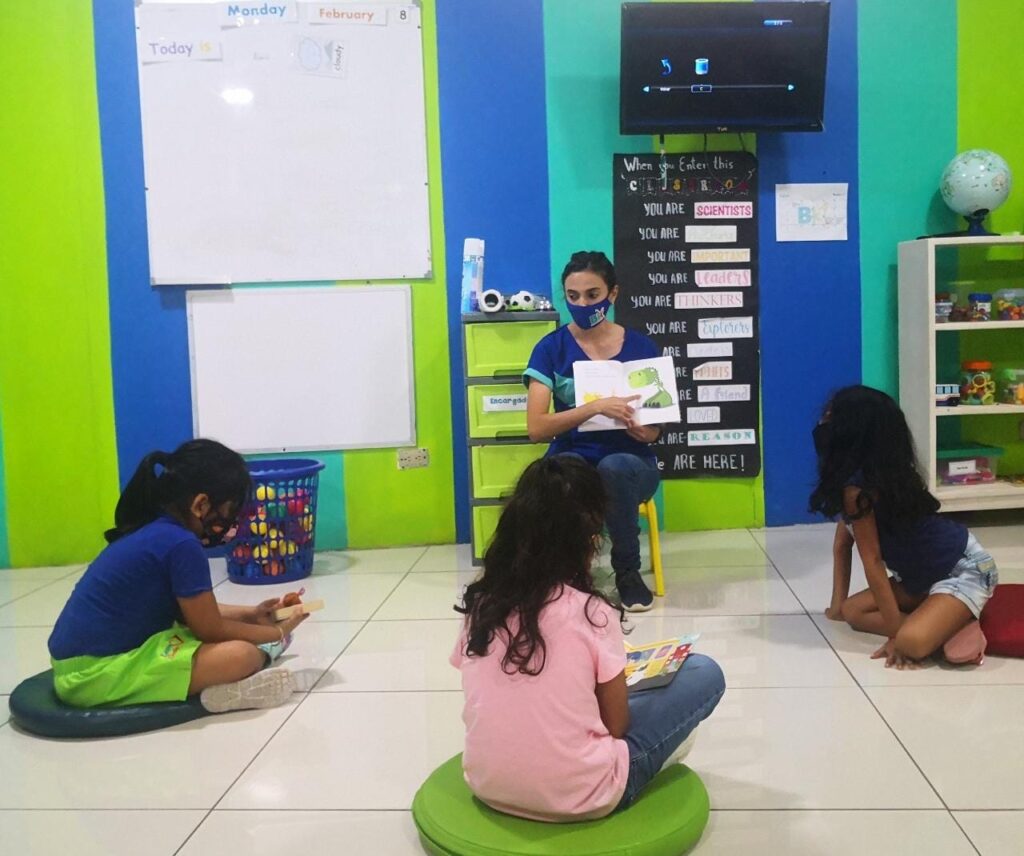
The TPRS method has three essential phases. Let’s take a closer look at each one.
Phase 1: Establishing Meaning
The teacher explains the new vocabulary for the lesson in this first phase. For words that refer to concrete objects or actions, the teacher uses TPR (for example, ‘boy,’ ‘goes,’ ‘finds,’ ‘cat’). For abstract concepts, the teacher provides a translation in the students’ language.
ESL teachers can use presentations with pictures to convey the new vocabulary when their students come from multiple linguistic backgrounds or when they do not speak their students’ language. These teachers also rely more heavily on TPR.
ESL teachers can also establish meaning by using TAG: Translation (the direct translation of the word), Association (what does this word remind you of?), and Gesture (a gesture attached to the word). Establishing meaning requires many repetitions of the new vocabulary so that students assimilate it and become ready to use it.
Comprehension checks keep this phase on track. Concept checking questions and a quick “what did I just say?” both work here.
TPRS teachers also watch one student in particular, often called the barometer student: the learner who struggles most with the language but is still actively trying. That student sets the pace, and when the barometer student understands, the rest of the class almost certainly does.
Phase 2: Ask a Story
The second phase of the TPRS method is to ask a story. The wording is significant here. The TPRS teacher does not tell a story. Instead, they co-create the story with their students by asking them to add details or characters. Asking a story emphasizes the collaborative nature of the method.
Many TPRS teachers warm up this phase with Personalized Questions and Answers (PQA), which works much like the ESL warm-up activities teachers already run. The teacher takes the same target structures and asks students about their own lives before any story begins.
If the structure is “wants to have,” the teacher asks who in the room wants to have a dog, then follows the most interesting answer wherever it goes. PQA gives students repetitions of the structure and hands the teacher real details about students that can go straight into the story afterward.
Phase 3: Reading
The third and final phase is reading. This phase redirects students from processing aural input to processing written input. The teacher gives students texts that contain mostly known vocabulary or cognates. The texts can also be a summary of a story the class created earlier or a simple reader with many cognates, pictures, and a glossary for the unknown vocabulary.
Two techniques make this phase work for classes with a wide spread of reading levels:
-
Embedded readings: present the same story in several versions that build on each other, starting with a stripped-down base text and adding detail with each pass, so struggling readers meet the plot before they meet the complexity.
-
Pop-up grammar: when a grammatical feature appears in the text, the teacher explains it in seconds and returns to the story. The explanation stays short on purpose, because long grammar detours pull the class out of the target language and back into English.
Discover some of the best tips for teaching reading in ESL classes.
The TPRS recipe
TPRS teachers have developed a recipe that gives students enough repetitions and therefore enough exposure to the new language. The recipe is called ACT, ACT, Describe.
ACT stands for Add (a character, a detail, or a sentence), Circle, and Triangle. The acronym describes a recipe for establishing meaning. The teacher introduces the first sentence, for example, “There is a boy.” They then circle that sentence: they ask the whole class simple yes/no or either/or questions, or use question words. The students respond chorally with one-word answers (yes, no, a boy, etc.).
The teacher then moves to the triangle phase and directs their attention to individual students. They can ask the same questions, but now each student responds in complete sentences. Once the story has progressed through the first few sentences with ACT, the teacher describes what has happened so far and then asks individual students to describe the situation.
DtS (describe the situation) happens after circling and triangling have given students enough repetitions to internalize the new language. Students are then ready to produce sentences in the target language.
Remember that TPRS language has to be RICH: Repetitive, Interesting, Comprehensible, and High-Frequency Language. TPRS stories also share fixed characteristics:
-
The story presents a problem.
-
The protagonist travels to multiple locations to solve the problem.
-
The protagonist finally solves the problem.
Most TPRS teachers limit a story to about three target structures and stretch that story across several classes rather than finishing it in one. New TPRS teachers tend to move too fast and introduce too much vocabulary at once. Repeating a small set of structures improves retention more than covering a long word list.
What are the best TPRS resources for teachers?
The official TPRS site offers a wide range of resources, from slide presentations of simple stories to readings and cultural activities. The site also suggests gestures for explaining new vocabulary without resorting to the student’s mother tongue, and it lists common questions to ask during circling and triangling.
The following example, from Chameleon English, shows how a teacher uses TPRS to teach ESL to students with a B2 level:
Once you have learned the recipe (ACT, ACT, Describe) and have a basic story, preferably illustrated and organized in a presentation, the lesson runs with very little additional work, which puts an established TPRS story closer to no-prep ESL activities than to a textbook unit. You only decide, for example, what new vocabulary you want to introduce or what characters and details you wish to add.
The official TPRS site keeps a free resources section, but its leveled novels and teacher guides sit behind a paid catalog. Teachers working without a materials budget usually adapt a free story script, or one of the many free ESL lesson plans available online, to their own curriculum first, then buy one class set of readers after the method has proven itself with a single group.
You can use the following TPRS lesson plan template, from TPRS Books, to get started:
What are some examples of TPRS activities?
Circling and triangling
Circling and triangling are the most common activities. They allow students to practice each element of the given sentences.
In the simple statement “Bob wanted a cat,” we can circle and triangle the subject (Did Bob want a cat, or did I want a cat? Who wanted a cat?), the verb (Did Bob want a cat? Did Bob want a cat, or did he have a cat?), and the object (Did Bob want a cat or a dog? What did Bob want?).
When we progress from circling and triangling to describing the situation (DtS), we reach the phase of language production at the paragraph level. At this stage, let your students practice independently before you ask them to describe the situation. Model the description for the class first, then ask your students to retell the story to a classmate.
If you are teaching English online, ask your students to mute themselves and practice by talking to their hand. Set a time for this activity. When the time expires, ask a few students to describe the situation.
Teaching kids or teens? Explore these fun ESL games and activities built for younger classrooms.
Dramatization
ESL teachers who use the TPRS method become attuned to the energy of their class. They focus on the story and on communication rather than on teaching and testing, which removes performance anxiety.
Teachers can do this through dramatization. Identify students who enjoy acting as you develop the story. Ask them to assume the roles of the main character or the parallel characters, and ask them to perform actions or reproduce noises.
If the character goes to Boston by motorcycle, how does the motorcycle sound? If the character is sad because he doesn’t have a cat, how does he sound when he says, “I’m sad because I don’t have a cat”? Acting shifts attention from teaching to communication. It also increases students’ involvement and raises the energy of the class.

Ready to master the terms, technology, and teaching tools used in the virtual EFL classroom?
Specialized Certification in Teaching English Online
Get CertifiedDaily reading
Write down the script of the developing story at the end of class. Use this script at the beginning of each class to practice reading with your students. You can read the script sentence by sentence and have students chorally translate if they share the same mother tongue.
An ESL teacher who works with students from different linguistic backgrounds can ask them to act out what is happening in the story, ask them to sum up the story in English, or prepare an answer sheet with a few questions to check for comprehension.
Timed writing
Students often surprise their teachers with how much they can write in English after only a few weeks of this method. TPRS students can write at least one hundred words at the end of their first year of instruction, and some can write over fifty words after only a couple of months. Run a ten-minute timed writing task and ask students to:
-
Summarize what has happened in the story so far.
-
Write a similar story with the vocabulary they have learned.
-
Imagine a different ending once the story is finished.
Assessment is the part of TPRS that schools ask about most, and these activities already supply the evidence. Timed writings give a word count record that shows growth month by month, and retells give a speaking sample you can score.
A short comprehension quiz on the class story covers reading. Teachers working inside grade reporting systems usually build a rubric around comprehension and communication rather than around accuracy, because fluency vs. accuracy is a real trade-off and accuracy arrives later in the acquisition process.
TPRS is gaining popularity, but many schools still treat it as a newcomer. Administrators can be reluctant to adopt a new method, and they worry that teachers will not cover the prescribed curriculum with it. However, teachers who have run a full story cycle often report that a small set of structures, repeated until students own them, holds better than a chapter the class skimmed once and never returned to.
Learning the recipe (ACT, ACT, Describe) and the pace takes training and practice before a story runs smoothly. That investment pays off in a classroom where students speak because they have something to say about a story they helped invent. TPRS earns a place alongside the other methods of ESL instruction you already use, and the teachers who get the most from it commit to a full story cycle before they judge the results.