Bridge TEFL
  Expert Series Webinars
  BridgeUniverse Blog
  TEFL Jobs
  Language Training
  About Bridge



Virtual ESL teachers are in high demand as online English teaching continues to grow. People of all ages, professions, and backgrounds are looking for flexible online work, and teaching English online is one of the most accessible entry points, even for people who have never taught before.
Teaching English is a genuinely rewarding job. Online teachers build real connections with students around the world, develop lasting professional skills, and enjoy the freedom to work from home or abroad. The field has room for full-time and part-time teachers, and it’s a career that allows for changes at every stage.
This guide will walk you through how to become an online English teacher, step by step, from choosing the right teaching path and getting certified to finding your first job and building a career over time.
If you’re new to teaching, you’ll want to get initial training and qualification with a TEFL certificate. You can explore our online TEFL courses to get started!
- Step 1: Get qualified to teach online
- Step 2: Decide who you want to teach online
- Step 3: Search for jobs that fit your qualifications and preferences
- Step 4: Apply to online teaching jobs
- Step 5: Be the best online teacher you can be and maximize your earning potential
- What if I prefer to become a freelance online English teacher instead of working with a company?
Step 1: Get qualified to teach online
The right qualifications depend partly on which teaching path you choose. Before diving into the specific requirements, here is a comparison of the three main ways to teach English online:
Teachers who have leaped into independent teaching often notice a shift in mindset. Luisa, a Bridge grad from Brazil who is now an online ESL teacher and life coach, describes her turning point:
“This has kind of been a comeback for me because I was away from teaching English for some time. The pandemic put me into that online mindset that’s now necessary. I said, ‘You know what? I should go back to teaching and use that online platform to be my office.’ So, I’ve been just keeping my social media and my website as a source of leads.”

Most new online English teachers start out working with a company (many of Bridge’s recommended employers have available TEFL jobs), but before you embark on a job hunt or send your application out, you’ll first want to make sure you fit the requirements for teaching English online. Each company sets its own qualifications; however, most expect the following prerequisites. Chances are, you’re already close to qualified.
A TEFL/TESOL certification
Nearly every company requires a TEFL certification, preferably one that covers a minimum of 120 hours of study, like Bridge’s 120-Hour Master TEFL Certificate or, for more advanced training, the Bridge IDELTOnline™. Having one of these certifications proves that you’re fully equipped with English teaching skills.
To take your resume a step further and stand out to employers as a candidate who’s serious about preparing for a virtual teaching position, it’s highly recommended that you also add a Specialized Certification in Teaching English Online to your online TEFL training of choice. This will ensure that you have the skills needed for the virtual classroom, such as using online platforms and engaging students virtually.
Another option is to take the Master TEFL Certificate + Teaching English Online Bundle, a comprehensive, 240-hour certification that qualifies you to teach both online and abroad.
When choosing a course provider, look for accredited options. Bridge is institutionally accredited by ACCET, an accrediting body recognized by the U.S. Department of Education, which makes Bridge’s TEFL/TESOL certifications recognized and accepted internationally. You can contact an experienced Bridge Advisor to help you choose the right TEFL/TESOL course for your specific plans.
A bachelor’s degree
While it’s true that many companies request teachers to have a university degree (usually in any field), it’s not impossible to find employers who accept applicants who are currently enrolled in a bachelor’s program or who don’t have a degree at all. Don’t worry if you don’t have a degree or much experience – there are online tutoring opportunities for people of all backgrounds and experience levels.
Find out more about teaching English online, even if you don’t have a degree.
Previous teaching experience
Although some companies require a certain number of years of classroom or online teaching experience, there are a number of online English schools that welcome newcomers to the field. But even if you haven’t taught English before, you can gain experience in other ways, such as by taking a 60-Hour Practicum in Teaching English Online, volunteering, or offering your online tutoring services for free. When applying for online teaching jobs with companies, be sure to highlight these kinds of experience, along with other education-related activities like mentoring or training employees.
Learn about more ways to gain TEFL/TESOL experience and get your career started.
Computer and other equipment
Even though it’s not a qualification, having the right equipment is definitely a must-have before you consider applying for online jobs. A working computer (laptop or desktop), a headset with a noise-cancelling microphone, a webcam, and a stable internet connection are the tech essentials required by online English teaching companies, though specifications may vary from company to company. Remember to give your equipment a test run before your interviews or any teaching demos to ensure that it is compatible with the most common teaching platforms.

Ready to master the terms, technology, and teaching tools used in the virtual EFL classroom?
Specialized Certification in Teaching English Online
Get CertifiedStep 2: Decide who you want to teach online
If you want to become an online teacher, you’ll need to ask an important question early on: Do you want to teach English classes to kids, adults, or both? Choosing the right age group depends on your personal preferences and previous experience, as well as the pros and cons of each option.
Teaching English to kids or teens
Energetic teachers who enjoy dynamic activities tend to thrive in children’s classes.
Kids’ classes often require patience, strong classroom management skills, and a variety of activities to keep learners engaged. Young learners are typically enthusiastic, eager to participate in games, and not worried about looking or sounding silly in class.
Find out more about teaching English to adults vs. kids.
Teaching English to adults
Adult English classes – which can include college students, business professionals, or people working in tourism – focus more on building language skills for a specific purpose. Teaching adults involves less disciplining than teaching kids, but it requires detail-oriented lesson planning and content that stays relevant to learners’ real-world lives and goals.
Here are some companies where you can teach English online to adults.
ESL niches
Aside from teaching a particular age group, you can also opt to teach specialized subjects or ESL niches like Business English, technical English, or preparing students for English language proficiency exams like the PTE, TOEFL, or IELTS.
If you want to stand out by teaching a specific ESL niche, Specialized Certificate courses and short, targeted Micro-credential courses can help you develop unique, practical skills in a variety of subjects.
Step 3: Search for jobs that fit your qualifications and preferences
Now that you’ve checked off the most important online ESL teaching requirements and decided who you want to teach, you can start your job search. More and more online English teaching positions are becoming available, and if you have the right credentials, you’ll find an opportunity that matches your qualifications and preferences.
Here are some effective ways to find online English teaching jobs:
Bridge also offers several resources specifically designed to connect teachers with online teaching jobs. Here are three worth bookmarking:
The Job Board
You can easily search for online English teaching jobs on the Bridge Job Board. Simply browse the available teaching jobs and apply directly to any position. Bridge posts listings for job openings from its highly vetted partners. It’s worth exploring openings even before you finish your certification, so you can understand the market and what employers are currently looking for.
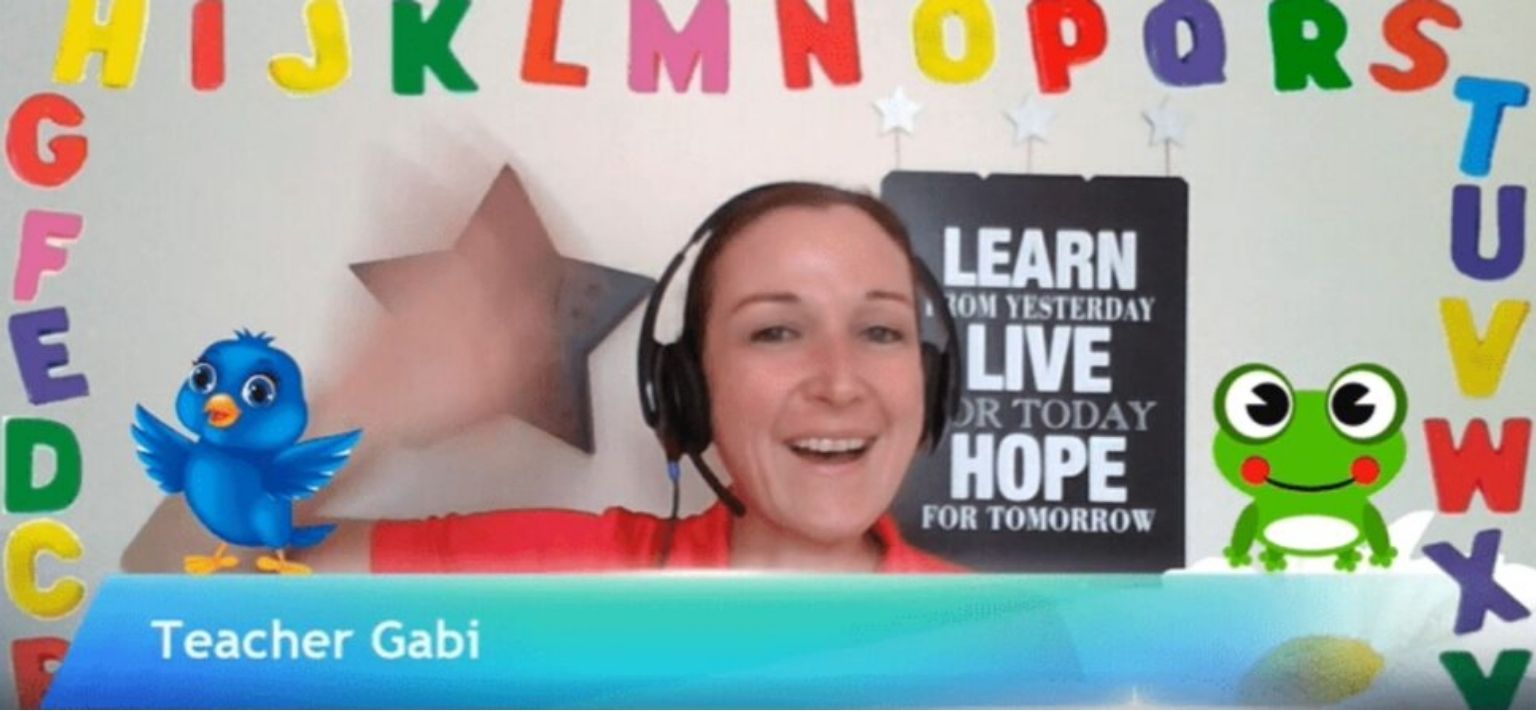
Bridge grad Gabrielle, from South Africa, found both of her online teaching positions through the board: “I found jobs through the Bridge Job Board. That’s been awesome. I’ve used the platform, I’ve studied through them, and I’ve gotten both of my jobs through them.”
Bridge Facebook groups
Social media is a useful way to learn about new job opportunities and connect with other job seekers and experienced teachers. Bridge runs two Facebook groups for teachers:
You can join these groups to stay up to date on the latest job openings, ask for career or teaching advice, network with other teachers, discuss teaching strategies, and get support throughout your TEFL/TESOL journey.
These companies are currently seeking online English teachers.
The BridgeUniverse blog
Updated weekly, the BridgeUniverse blog offers resources, inspiration, and ELT industry news from around the world. Educators and ESL specialists write the articles, and the topics tackle some of the biggest challenges English teachers face. There is an entire section dedicated to job resources to help you on your hunt. Keeping up with industry news is a useful way to find out how the job market is doing and where most of the TEFL/TESOL jobs are at any given point. You can also use articles to connect with other online teachers and build your community of practice one person at a time.
Step 4: Apply to online teaching jobs
Once you’ve narrowed down your job search and selected the companies you want to apply to, it’s time to complete your online application, work through the selection process, and land the job offer you’ve been working toward.
Craft your resume and apply
A TEFL resume for teaching English online differs from a traditional CV in a few important ways. Online employers want evidence not just of your qualifications but of your readiness for the virtual classroom. The format also gives you room to highlight skills and experiences that a standard paper resume might not have room for.
Here are a few things to keep in mind:
A clear, targeted application helps employers see your value right away. When your resume reflects both your teaching strengths and your online readiness, you make a stronger first impression.
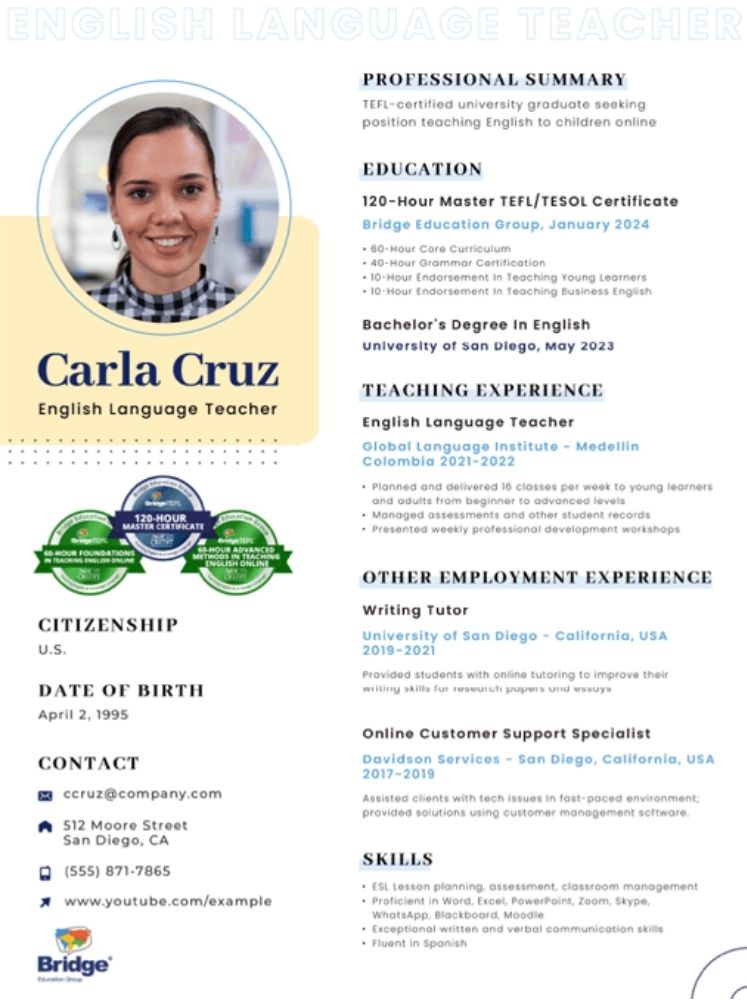
Check out the sample online English teaching resume below for inspiration:
Ace your online job interview
The next step in getting an online teaching job, and often the most dreaded one, is the interview. Most online teaching jobs require several things during the interview process, including the typical Q&A as well as a demo teaching lesson. Don’t panic: employers typically provide detailed instructions on what they want to see in the demo, and you can find example videos online, like the one below, so you know what to expect.
Preparation makes the interview process far more manageable. When you know what to expect and practice in advance, you can present yourself with more clarity and confidence.
The hiring process for online ESL companies is mostly straightforward. Applicants usually need to pass the following stages before successfully landing a teaching position:
- Fill out the application form or upload your online teacher resume on the company’s recruitment page.
- Submit a demo ESL teaching video with your application (you’ll be given detailed instructions).
- Schedule a virtual interview with your potential employer.
- If you pass the interview, the recruiter may ask you to give some trial classes with a student.
- If the company decides to hire you, you’ll need to review and sign your work contract.
- Once you’re on board, you’ll need to set your teaching schedule on the school’s system or online platform.

Step 5: Be the best online teacher you can be and maximize your earning potential
The last step in how to become an online English teacher is to put your skills to work and bring your passion for teaching into the virtual classroom. You’ll surely want to see your students coming back for your classes, so remember to make use of fun ESL games and activities, keep students engaged with a lively teaching background, and build rapport with your learners.
Be aware of the review process for online ESL teachers
Online schools usually have a review process for English tutors, which can vary from one company to another. Most companies evaluate online teachers through a formal class observation conducted after a certain number of classes, and by gathering students’ written feedback about their tutor.
Professional development opportunities
Training to be an online English teacher gives you the practical skills needed to help students improve their language proficiency, though learning never stops there. If you want to upgrade the quality of your teaching, consider pursuing professional development with targeted training in specific TEFL niches.
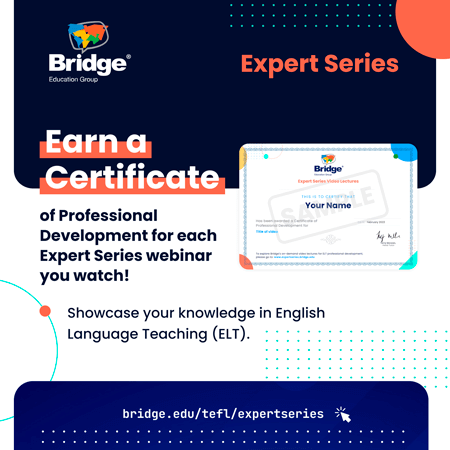
Bridge offers a variety of short Micro-credential courses that can equip you with knowledge and skills in developing materials and using multimedia in the online classroom. You can also stay current by joining online teaching communities and tuning in to TEFL/TESOL webinars, like Bridge Expert Series.
Maximize your earning potential
Whether you’re teaching English online as a full-time role or a side gig, it’s important to make the most of your earning potential as a virtual ESL teacher. Aside from choosing to work with the highest-paying tutoring companies, here are some other ways to boost your income:
Get more tips for maximizing your earning potential as an online English teacher.
What if I prefer to become a freelance online English teacher instead of working with a company?

You can certainly pursue the freelancing path as a virtual ESL teacher if you don’t want to work with an online school. Although being an independent English tutor comes with a lot of responsibility – from finding students to sourcing materials to managing your finances – it ultimately grants you more flexibility and higher earning potential, since you keep all your students’ payments.
When it comes to getting started, the steps to launch a freelance online English teaching career are not that different from working with a company. However, the following additional steps are recommended to successfully launch your teaching business:
Whether you want to work with a company or as a freelancer, you can become an online ESL teacher by following these steps. Getting an online teaching job takes more than interest alone, but the process becomes much more manageable when you break it down into clear stages. With the right TEFL/TESOL training and the determination to succeed, there’s no doubt that you’ll be enjoying the perks of this enriching career soon – and even building on it for the long term if you choose to. Online teaching offers flexibility, professional growth, and the chance to build meaningful connections with students around the world.