Bridge TEFL
  Expert Series Webinars
  BridgeUniverse Blog
  TEFL Jobs
  Language Training
  About Bridge







Let’s face it – young learners and teens might not always put learning English as a second language on their favorite activities list. However, ESL games for the classroom can help you incorporate interactive, fun, and memorable review into your lesson plans.
If you’re new to teaching, you’ll want to get initial training and qualification with a TEFL certificate. You can explore our online TEFL courses to get started!
How do I make my ESL class interactive?
Interactive ESL lessons matter for all levels of English language learners, but they matter especially for younger students and teens. Children have shorter attention spans, and teens may lack the natural motivation that older students have for language learning.
An interactive class keeps students engaged in the lesson. Here are a few ways to achieve this:
A good way to keep your ESL class interactive is to build lessons around student talk, student choice, and a steady shift from students “watching you teach” to “using English with purpose.” When you connect tasks to what learners already care about, and you use variety – audio, video, short texts, movement, and simple incentives – the whole group feels engaged. Invite students into planning, even in small ways, because ownership often beats speeches.
Check out these fun TEFL speaking activities to get your students talking.

What can ESL games do?
ESL activities and games can help students learn when teachers incorporate them into their classroom. Here are a few reasons why games make a good idea for teaching English.
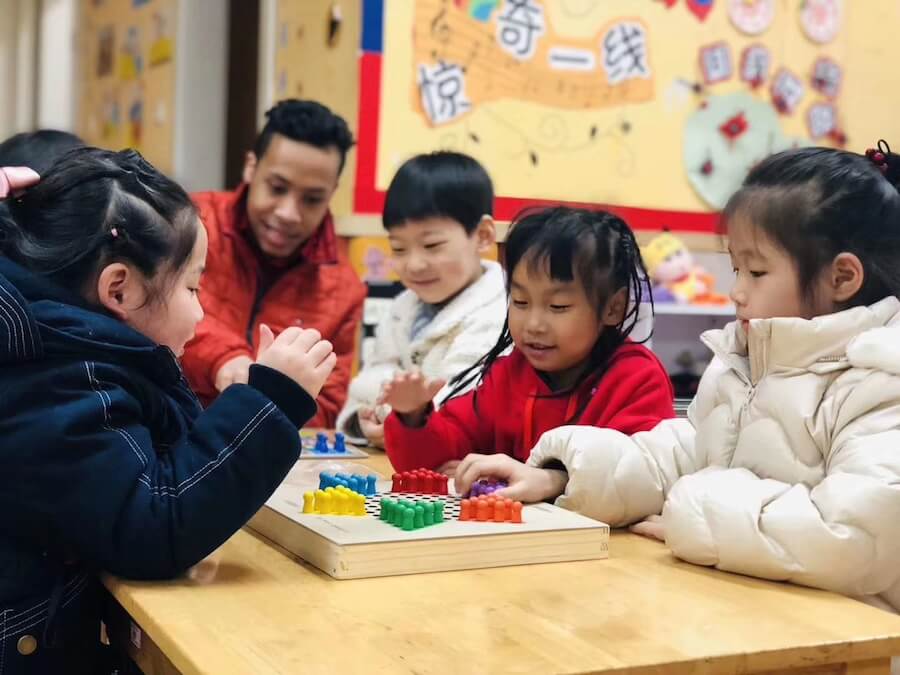
ESL games can do more than fill time, because they pull attention toward the language without turning the room into a pressure cooker. Students often retain vocabulary and structures more effectively when they link them to an activity, a challenge, or a quick win that feels memorable. Teachers also build confidence when they normalize mistakes inside a playful format, because learners take more risks when the stakes feel lower. You also strengthen rapport when you share a classroom rhythm that feels lively and human, and create a space where participation becomes the norm.
Where can I find ESL games and activities for children and teens?
If you’re looking for ESL games and activities for kids or teens to incorporate into your classroom, consider the following resources:
You can find strong ESL games for kids and teens when you treat your resources like a toolkit, because you only need a few reliable sources that you can adapt quickly. Teacher communities can give you real classroom-tested ideas, and lesson-plan websites offer ready-made activities that you can tweak for level, topic, and timing. Courses and some TEFL websites offer structured collections of games and creative English activities for students that align with clear objectives, saving planning energy when you need it most. Start with your students’ favorite games and reshape the rules around language aims, because familiar formats often produce faster engagement.
What are the best ESL games for teaching English to young learners?
Young children can be enthusiastic and active learners. Here are some ESL games for kids that are fun and engaging yet not too complex for young learners.
1. What’s Missing?
In this memory game, the teacher puts about 10-15 target vocabulary words on the board. The teacher can do this by taping flashcards on the board or by writing the words or drawing pictures.
The students line up in front of the board, and the teacher gives them about a minute to try to memorize all the vocabulary words they see. Then, the students must turn around so they can’t see the board (no peeking!), and the teacher removes one of the words. The students turn back around and must guess what’s missing. The first student to say the correct word gets a point! (If you use flashcards, you can hand the student the card as an easy way to keep score.)
2. H-A-N-G-M-A-N
This game gives English language learners practice with vocabulary and spelling skills.
- Have one student think of a word in their head.
- Have this student count how many letters are in the word and then draw underscore marks on the board for each letter in the word.
- The other students then take turns guessing letters from the alphabet that they think may be in the chosen word.
- If they guess a correct letter, it is written above the corresponding underscore marks and that student then gets a chance to guess what the word is.
- If they guess an incorrect letter, it is noted on the board, and one part of the stick figure hangman is drawn.
The game goal is to guess the word before a full stick figure is drawn, “hanging” the man.
To put a little twist on the game, draw a person with a parachute. Draw the same number of strings attaching the person to the parachute as the number of letters in the chosen word. The other students then take turns guessing letters from the alphabet that they think may be in the chosen word. If they guess a correct letter, it’s written above the corresponding underscore, and that student then gets a chance to guess what the word is. If they guess an incorrect letter, it is noted on the board, and one of the parachute strings is erased. The game goal is to guess the word before the person loses all of their parachute strings.
3. Categories
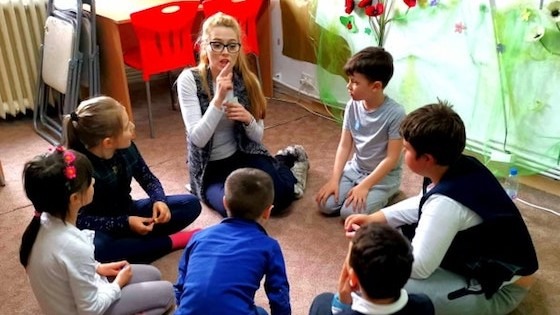
This game gives students another fun way to practice vocabulary. Brainstorm with your students to come up with a list of categories (maybe from new vocabulary you have recently taught), and write each category on a flashcard. Examples could be colors, jobs, or verbs. Choose two students to stand up. Call out a category and a letter of the alphabet (for example, “colors” and “b”). The first student who comes up with something from within that category that begins with the letter is the winner and remains standing. Choose another student to face the winner, then repeat with a new category and letter.
Get even more vocabulary ESL game ideas for in-person or online teaching.
4. Bingo
You can create bingo cards and a call sheet or print them from a website like Bingo Baker for this classic game adapted for young learners. For your call sheet, you can use the usual numbers and letters or get more creative with the vocabulary you have recently taught. For very young students, use pictures instead of words.
Cut up the call sheet and put the squares into a hat. Give each student a bingo card as well as something to mark their card with. Allow each student a turn to be the “caller.” Have the caller pick one square at a time from the hat and call out what is on the square. The other students listen for what is called and mark the word or image on their card. The first student to mark their entire bingo card calls out “Bingo!” and is the winner.
Feeling stuck when planning games? Follow this checklist and make sure they all work.
5. Alphabet Relay
Divide your students into two groups to play this ESL game for children. Give each group pieces of paper, and have each group write the letters of the alphabet on the paper to make flashcards. Shuffle each group of flashcards and place them in two piles on one side of the room. Have each group line up on the opposite side of the room. On the word “Go,” the first student in each line has to run across the room, find the letter A, and bring it back to their group. The next student finds the letter B, and so on. The first group to get to Z wins!
6. Memory
Pick five small objects and hide them under a piece of cloth. Show the objects to your students for a minute or two and then cover up the objects again. See how many of the objects your students can remember. Add more objects to make the game more challenging.
7. Telephone
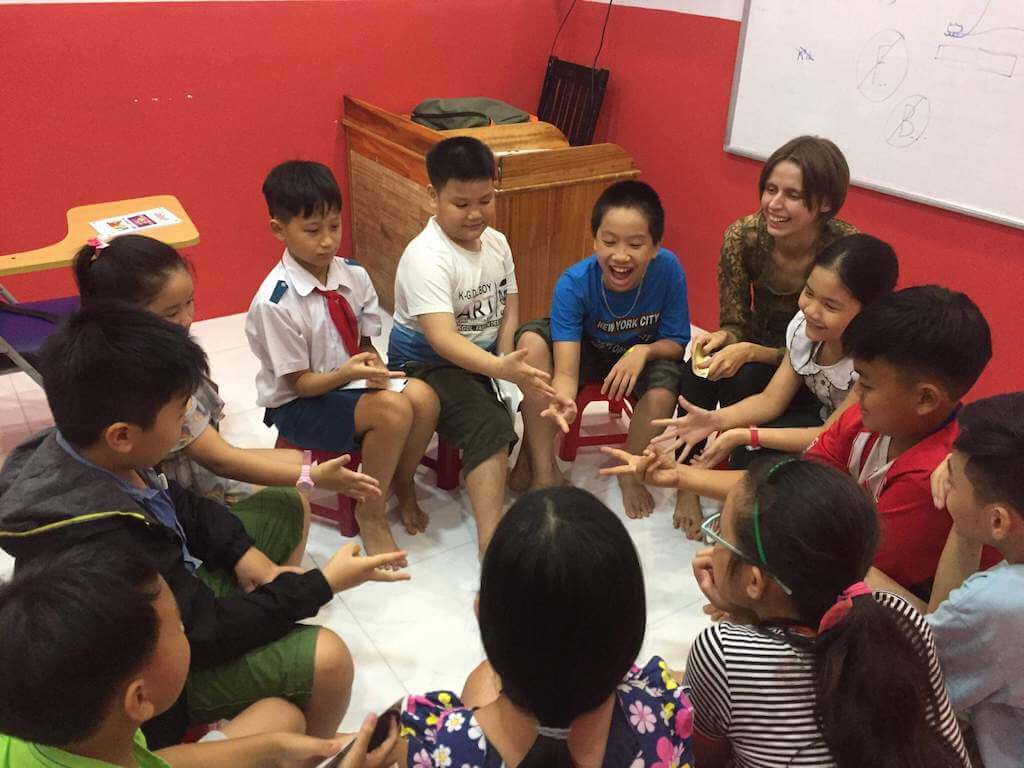
Students form a circle and one student starts by whispering a sentence into the ear of the student next to them. Have students incorporate at least one new vocabulary word or the newly learned grammar structure in their sentences. The second student then whispers the same sentence in the next student’s ear, and so on. At the end of the circle, have the last student say the sentence aloud and see how close (or hilariously far) it is from the original sentence!
Need ideas for the virtual classroom? Here are some low-prep ESL games for teaching online.
8. Ball Toss
Keep an inflatable ball in your classroom (or use something else, like a balled-up piece of paper, in a pinch!). Choose a question/instruction based on the lesson/level you just taught, e.g., “Name a fruit!” The student must answer and then toss the ball to another student to answer. Change the question mid-game. The random nature of the ball toss keeps students on their toes.
You keep young learners focused when you give them simple rules, clear goals, and quick turns, because they need structure even when the activity feels playful. You build language gains when you choose games that recycle the same target items repeatedly, since repetition hides inside the fun and still does the learning work. You also reduce behavior issues when you keep transitions tight and roles clear, because “What do I do now?” often causes more chaos than the game itself.
Check out the Micro-credential Games and Activities for the Online Classroom (Young Learners).
What are the best ESL games for teaching English to teenagers?
Teenagers and students with more experience with English typically use it more productively and communicatively. These ESL games for teens can be a great way to get your learners involved in the classroom and prompt them to use their knowledge of English.
9. English Only!
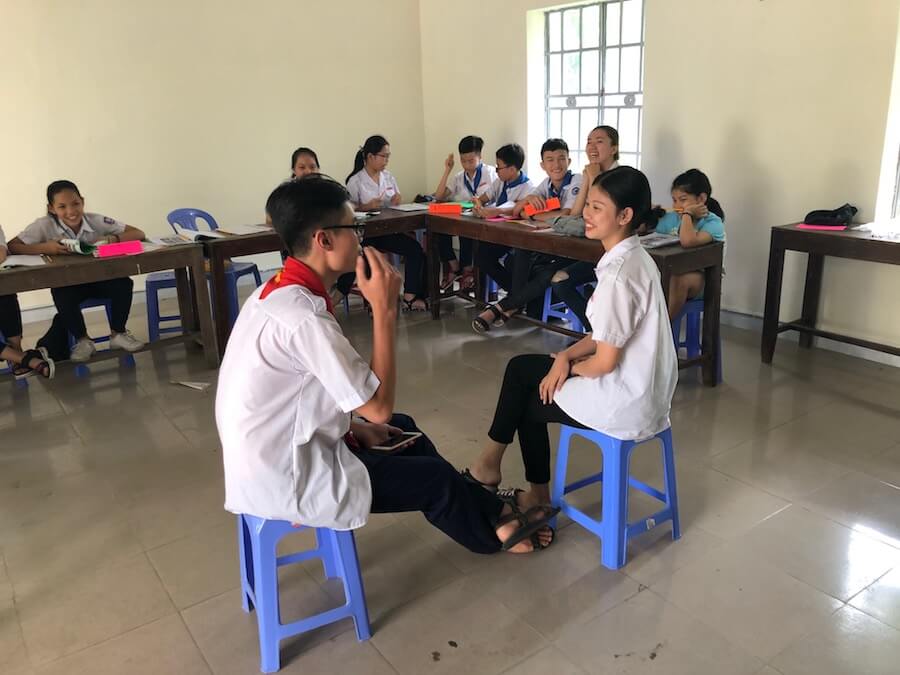
Turn it into a competition to speak only English during the whole period. Keep a tally on the whiteboard for each time a student speaks in their native tongue. This keeps them focusing on English, and fellow students even turn into “English police.” To turn it into a reward/consequences game that everyone can enjoy, have the student with the most tallies bring a treat for the whole class next time. Cookies for everyone!
-
Pro Tip: You can extend learning beyond the classroom with a language app like FLOW Speak, which provides a fun, low-stakes way for students to practice conversations in English. Students complete short, 2-7 minute conversation activities while the app uses voice recording technology to analyze responses and provide instant, AI-powered feedback. Students enjoy the conversation activities and can practice lessons repeatedly to work on sounding natural. Teachers can access the app’s admin dashboard to track progress and plan activities around areas of need highlighted by the app. Language apps like these are a fun, simple way to build students’ confidence and supplement classroom instruction.
10. Balloon Sentence Race
This high-energy game (from the Bridge Specialized TEFL/TESOL Certification Course in Teaching Teenagers) incorporates balloon popping and cell phones, so it’s perfect for teens or young adults. It can also be adapted to a variety of language levels and target grammar.
Students play the game in the following way:
Learn how to create ESL grammar lesson plans for any group.
Infuse fun into your lessons with this free eBook sample
Teaching Online Games and Activities – Young Learners
download11. Around the World
Have one student stand next to a seated student. The standing student must make it around the world (around the class) by correctly answering the question before each seated student does. An example of a question might be “What is the correct past tense ending of [insert an infinitive verb]?” Change the verb with each turn. If the standing student can answer correctly enough times to make it around the class, they have won! If a standing student is defeated by the seated student, they switch places, and it is the new student’s turn to try to make it around the world.
12. Hot Potato
Pass a ball or other object around the room, and the student with the ball has to answer a question, ask a question, or draw a prompt out of a bag when the music stops – you decide, though it is best to stick to one format for the duration of the game!

13. Roll the Dice, Make a Question
Write the numbers one through six on the board and a different question word (who, what, why, where, when, how) next to each one. When a student rolls the dice, he or she needs to make a question with the corresponding question word. Then, the student will call on a classmate to answer it.
14. Minimal Pairs
Use minimal pairs (words that sound similar and are often mispronounced by EFL learners) to make a list on the board. Examples: 1. very 2. berry 3. kitchen 4. chicken 5. three 6. tree 7. sixty 8. sixteen 9. sit 10. six. Students must write a number five or six digits long and then say their number using only the corresponding words. For example, if the student’s number is 23354, they’d have to say “berry, kitchen, kitchen, three, chicken.” Students take turns listening and trying to guess the other student’s number.
Check out other ESL pronunciation games to make your class stand out.
15. Never-Ending Story
Students form a circle (either as a whole class or in small groups). Write a sentence that could start a story, ideally incorporating vocabulary or grammar from the day’s lesson. Give the sentence to the first student, who continues the story by writing the second sentence before she passes it to the next student, who continues. At the end of the circle, have a student read the completed story. It is sure to get a laugh!
16. Your Day in Emojis
Use your phone to make a pictorial representation of any day in your recent past using only emojis. Take a screenshot, and then share it with your students (either give them handouts or display it on your screen if teaching online). Individually, with a partner, or in groups, have students create simple past-tense sentences about your emojis.
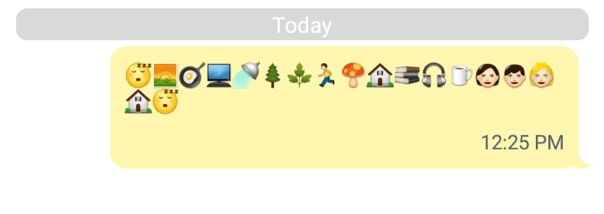
For example, using the photo above, which represents a Saturday, they could say something like, “She slept in. She woke up and ate breakfast. She watched some TV and took a shower. Then, she went to the park for a run. Next, she went home and read while she listened to music. Later, she got a coffee with her friends. Finally, she went home and slept.” It’s funny to see what your students come up with! Whichever student/pair/team is closest to correct wins.
Afterward, have students make an emoji pictorial of their weekends (or any day in the near past) on their phones. Then, see if the other students can figure out what they did from the emojis.
Teens get involved when teachers give them tasks that feel fast, social, and slightly competitive, because teenagers often respond well to momentum and challenge. The teacher should keep the language output meaningful by setting clear communicative aims, so games push learners to use English rather than to hide behind it.
Teachers may also gain traction when they let learners use familiar tools – phones, music, quick searches – while keeping boundaries clear, because structure keeps the class from turning into free time. Stronger participation is built when teachers frame games as a way to show what students can do, not as a way to act like kids.
Keeping young students interested and engaged can be a difficult task, but you help everyone in the classroom (including yourself) when you do, because students participate more, take more language risks, and build confidence through consistent success. When you choose games that match your language aim and classroom reality, you create a routine that supports learning instead of distracting from it, and fun ESL games and activities also make teaching more sustainable, because a class that feels engaged and connected usually gives you better learning (and a better day).