Bridge TEFL
  Expert Series Webinars
  BridgeUniverse Blog
  TEFL Jobs
  Language Training
  About Bridge








If you’re an online English teacher or hoping to become one, you’ll likely teach both individual classes and group English classes, whether you work for a company or become a freelance tutor. While the general teaching methodology is the same, you’ll find some differences, including the time allotted to teach classes, content adjustments you may need to make, and the process for student feedback. Let’s compare teaching one-on-one vs. group online English classes.
If you’re new to teaching, you’ll want to get initial training and qualification with a TEFL certificate. You can explore our online TEFL courses to get started!
- What is a group class when teaching English online?
- Do I need a different teaching platform for group classes?
- Is a typical group class session longer than a one-on-one class? Do the class dynamics change?
- Are there any lesson content adjustments for each type of class?
- How is the student feedback given at the end of group vs. one-on-one online English classes?
- How does the workload compare when teaching individual vs. group online classes?
What is a group class when teaching English online?
Teaching group classes with a company
Of course, you’re probably already familiar with the concept of teaching one-on-one English classes online, meaning one student at a time, and this may be what you’re expecting when you teach English online for a company. However, many companies also require tutors to teach group classes. Most companies define “group” classes as classes with more than one student, but the average group class is typically no more than four students.
This format of company-matched small groups has become the norm, even as online English teaching has grown into a far larger and more established field than it was a few years ago. It differs slightly from group classes on marketplaces for teaching English online that some platforms now offer, where a single tutor may teach up to six students at a time. However, both group sizes are considered small or average and still allow plenty of time for students to speak and interact in class.
Teaching group classes as a freelancer
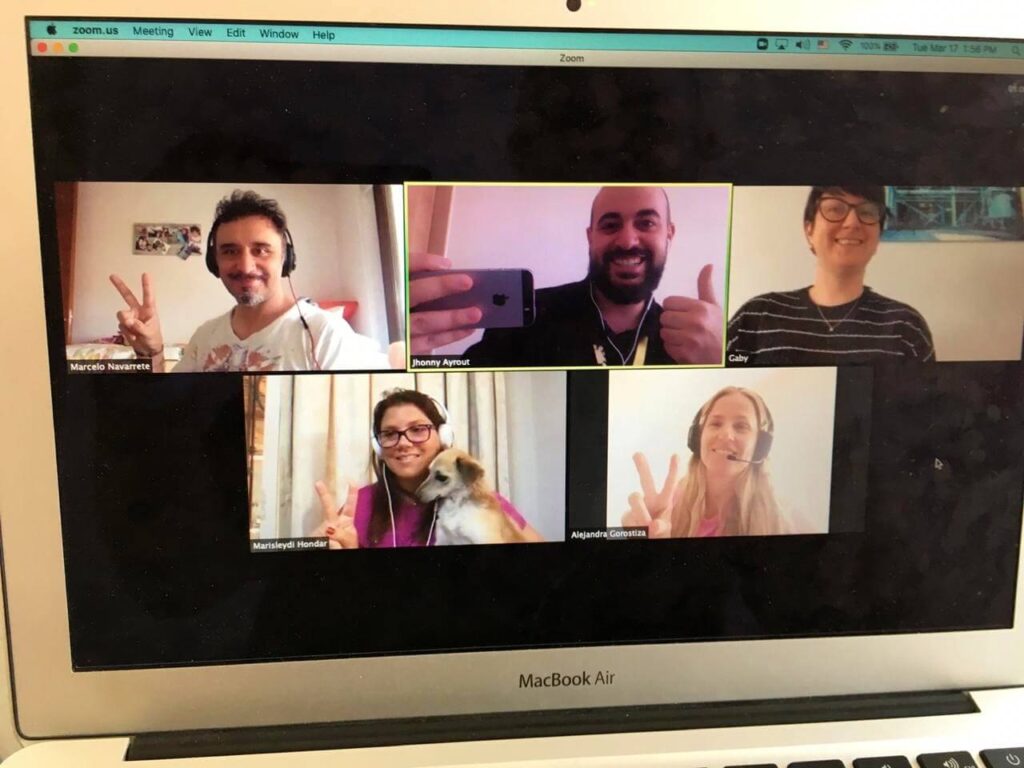
Some online tutoring companies let you teach much larger classes, and you may also choose to teach large classes if you work independently as a freelance English teacher (and thanks to video conferencing solutions like Zoom or Teams, the sky’s the limit as far as capacity). Novice teachers are likely to take their first step teaching group classes online with a company or on a marketplace – this is the starting point for most teachers due to the ease of lesson resources, availability of a ready-to-use teaching platform, and constant student demand.
Freelance teaching has also recently branched out beyond live group sessions. Many independent tutors now build and sell their own structured course series through marketplaces or create supplementary materials students work through between live sessions, giving freelancers more ways to earn from group teaching beyond the live class itself.

Do I need a different teaching platform for group classes?
Luckily, when you teach online with a company, they provide the teaching platform (and the curriculum), and that platform is the same regardless of whether you’re teaching group or individual English classes. Typically, the system automatically adjusts the classroom size and lesson content to accommodate the number of students being taught, which makes teaching the session easier for the tutor.
However, the platform only handles the technical side. How you use the session time you’re given, especially once you’re managing more than one student, is where the real differences start to show. One student gets your full attention for the whole session; several students split that same time, and a single long answer can quickly become one student speaking over someone else’s turn.
Trying to reduce teacher talking time and setting a stricter time limit for each activity can help prevent this. You should also start activities by asking each student in order, so that every student gets a guaranteed turn before the group moves on, keeping the pace even instead of favoring whoever speaks first.
Is a typical group class session longer than a one-on-one class? Do the class dynamics change?
Most companies allot group and individual classes the same amount of time per session, usually 30 or 45 minutes. Now, you may be wondering, “How will I be able to focus attention on each student in a group class if I still have the same time window?” Good question.
The constraint is the same no matter how many students are in the room: the same time, just shared differently. Managing that shared time well is its own skill, and it’s one of the first things that separates an experienced group tutor from someone still learning the ropes.
A few habits can make that balance easier to manage. Plan each activity with a clear end, so you can cut or extend it without disrupting the rest of the lesson if the group finishes early or late. Keep your questions shorter and more closed in a group setting than you would in a one-on-one class, since open-ended prompts tend to take longer the more students are answering them. If one part of the lesson runs long, class after class, structure your online lesson plan differently before the next lesson instead of trying to fix it mid-lesson.
Students who take online group classes will understand that this type of learning environment is different from that of a one-on-one class. You won’t be able to give an extended amount of attention to a particular student in a group class, but students can still interact and work together in various activities, which wouldn’t be possible in a one-on-one setting.
You’ll do your best to help each student in the group as much as you can, make quick corrections, use concept-checking questions, and deliver all content by the end of the lesson. Those dynamics get easier to manage with practice. What you bring into the room also shifts slightly between formats, starting with how warm-ups and lesson content are structured, which is where we’ll turn next.
Are there any lesson content adjustments for each type of class?
Warm-up session
Regardless of the kind of class you’re teaching, warm-up activities have the same goals: to make students feel at ease, especially if they’re new to the class, and to get their minds started thinking in English. Warmers for one-on-one and group classes differ slightly, though.
For instance, small talk is a common warmer, but small talk with an individual student is usually brief and more focused on their lives. On the other hand, even one warm-up question posed to a group of students could instantly become a class discussion and would definitely last longer.
Let’s say you start your group class by asking a student what his favorite movie is. Then a classmate comments about the film or mentions another one she likes. Considering this, you have to manage your time and use effective classroom management strategies to make sure your warm-ups don’t take over the entire class.
Aside from small talk, you can also use the first part of the class to play simple games like charades or guessing games. You can even make these competitive for your group classes to make the warm-up more dynamic. Many platforms now build quick polls or reaction features directly into the group classroom, which can help you gauge the room fast during a warm-up without letting one student’s answer turn into a five-minute tangent.
Need more ideas? Discover more icebreakers to get your students talking.
Lesson Content
During the actual lesson, you’ll typically go through a series of slides (provided by the company you work for) with your student or group class, and these slides occupy most of the class session. These teaching slides may have the same content for both group and individual classes. However, you may get additional lesson slides for one-on-one classes, depending on the class level, because they tend to finish faster than a group class.
Some tutors now use AI lesson-planning tools to generate a quick extra activity on the spot when slides run short, which comes in handy for a one-on-one class that finishes faster than expected.
To be on the safe side, keep a handful of extra practice activities up your sleeve for those instances when you end up with extra class time after finishing a lesson. Use this great opportunity to break out some kid-friendly ESL songs, flashcards, games for teaching English online, or have a conversation to give the student more English practice. It’s good to have a few easy-to-adapt lesson plans you can always rely on.
Once the lesson wraps up, whether you spent it on slides, games, or a quick activity, the next difference shows up right away: how you report back on what happened in the room, which looks noticeably different for a group versus a one-on-one class.

Find the materials that will benefit your students the most with the free
ESL Teacher’s Guide to Lesson Planning Resources
downloadHow is the student feedback given at the end of group vs. one-on-one online English classes?
Group classes
Mastering the feedback process is one of the biggest steps separating novice and experienced teachers. At the end of a group class, online tutoring companies commonly require you to provide feedback on each student, such as by filling out online forms above each student’s name on your screen. The feedback process for group classes is fairly quick, and you can complete it in less than a minute. The forms might include:
Many platforms now draft a starting point for this feedback automatically, pulling from in-session data like participation or response time, and you simply review and adjust it before submitting. Check whether your platform offers this, since it can shave real time off a busy day of back-to-back group classes.

One-on-one classes
For one-on-one classes, the feedback process takes a bit more time than you might expect (but just a few more minutes, usually). This is because students in one-on-one classes receive more in-depth feedback.
For example, the first part of the feedback form might request the same information as the group classes. However, the form might also include a section where the teacher can comment on his or her experience with the student and provide more details on what the student did well or needs more work on. Also, the teacher can give a better explanation of the behaviors that occurred in difficult classes where a student might be misbehaving, and the company or the kid’s parents can review this further.
The same AI drafting tools that speed up group feedback can help here too, but most tutors still rewrite or add to the draft more heavily for one-on-one feedback, since it depends so much on a closer read of the individual student.

How does the workload compare when teaching individual vs. group online classes?
Does teaching a class with more students mean more preparation and work? The truth is: it doesn’t. You might be surprised to learn that the amount of work needed for an online class of 2 – 4 students is not very different from that for a class with a single student. Why? The online tutoring company you work for will provide a tailored curriculum to accommodate the number of students you’re teaching. Plus, the group-class dynamic encourages students to interact with one another instead of relying entirely on you for interaction, as they would in a one-on-one class.
None of this means one format is harder than the other. Group and individual classes ask different things of you: tighter time management and broader attention in a group, deeper individualized feedback and better rapport in a one-on-one. Most online tutors end up teaching both, often in the same week, and switching comfortably between them becomes part of the job fairly quickly.
That range also matters for where your teaching career goes next, since some of the better-paying niches in online teaching, business English cohorts and corporate group training among them, depend on a tutor who’s just as comfortable leading a group as working one-on-one. Whichever class is next on your schedule, the underlying job stays the same: prepare the material, read the room, and adjust as you go.