Bridge TEFL
  Expert Series Webinars
  BridgeUniverse Blog
  TEFL Jobs
  Language Training
  About Bridge









So, you’ve decided to start teaching English online independently? You’ve equipped yourself with the right teaching certifications, skills, the essential computer equipment, and plenty of enthusiasm. But now you realize that you lack the one thing that will get your business going: students. Don’t worry. Here are the best strategies for finding online ESL students and increasing your earnings quickly.
If you’re new to teaching, you’ll want to get initial training and qualification with a TEFL certificate. You can explore our online TEFL courses to get started.
How do I recruit ESL students?
English teachers who start teaching English independently online often face a major concern: figuring out how to find students for online teaching and building a client base. Being a teacherpreneur means you’re in charge of advertising yourself and building your brand, unlike working with a school or company, where learners are assigned to you.
If you’ve typed phrases like ‘where to find private students esl’ or ‘where do i find students for language coaching online’ into a search bar, you’re not alone, and this guide walks through exactly how to solve that.
Bringing in more private students requires effort and determination, but it’s not impossible – it all comes down to knowing where and how to market your classes effectively. Let’s look at how to find private ESL students as an independent English teacher.

Create a website or blog
Independent online ESL teachers need a strong online presence, and creating a website is one effective way to get private ESL students and build it.
A website makes you look more professional and gives you a central location to showcase your qualifications and reviews from private students. It also makes it easier for potential students to contact you.
-
Pro Tip: Making a website or blog isn’t difficult nowadays. You can create one on your own through user-friendly blog makers like WordPress or Squarespace. Your page doesn’t have to be flashy. You only need a simple, easy-to-navigate site where prospective learners can read about your background, experience, and a description of your classes.
Check out these EFL blogs and bloggers for inspiration.
Use social media
Social media sites like Facebook, Instagram, LinkedIn, YouTube, and many others have evolved into channels for learning, networking, and promoting businesses. You can reach a greater audience and find students through social media, whether by posting useful English grammar tips or creating an online community of language learners.
Andres Bermudez, a Mexican teacher running his own online ESL school, can attest to how social media has helped grow his business. “My primary way of finding students is through my Facebook page. I also post different flyers or language content in several language learning or teaching groups,” he shared.
Teaching English online independently is competitive, so keep this in mind when using social media. You can’t afford slow replies to prospective students’ inquiries about your tutoring services. Make sure to answer any inquiries within 24 hours, and aim to reply much sooner. If you don’t, a prospective student will probably choose the other teacher who responded first.
-
Pro Tip: Creativity helps generate buzz on social media. Got a crazy idea about how to help learners with pronouncing difficult sounds? Go ahead and share it on your social media page.

Advertise via word of mouth
Referrals still never fail to bring in more students for private ESL tutoring, even in a digital age.
If you’re wondering how to find private students to tutor in English, word of mouth is one of the most reliable methods. A lot of learners prefer to hire a private tutor recommended by a family member or friend. Remember to mention your online ESL venture to the people in your circles, so they can tell as many people as possible about your classes.
-
Pro Tip: Students who are happy with your lessons can also refer you to new learners. As Alejandro Olivares, a freelance Venezuelan ESL teacher, explains, “Always remember that your work speaks for itself. If your students like how you teach, they will recommend you.”
Post flyers
If you’re wondering where to find private ESL students offline, you can also market yourself outside the virtual world by putting up flyers or leaving your business cards in places where many people might be interested in studying English, such as schools, community centers, or even office reception areas.
-
Pro Tip #1: Attract more attention by making your flyers colorful and easy to read.
Pro Tip #2: Make sure to post your flyers where people can easily see them.
Pay for ads
You can also pay for targeted advertising spots that appear frequently on various websites or social media feeds to get private ESL students and grow your business. For instance, you can set up paid ads on:
-
Popular social networking sites, such as Facebook, Instagram, and LinkedIn
-
Search engines like Google
-
Video content sites like YouTube
-
Pro Tip: Purchasing paid ads on social media is usually inexpensive. However, make sure to choose the platform, pricing, and format that work best for you and your budget.

Network
Finally, you can promote your online classes further or even get students right away through networking. You can always make connections through virtual or in-person events, such as conferences or career fairs, or even through simple social interactions at a party or while traveling.
-
Pro Tip: Always have your business cards in hand during business or social events. Potential clients or new contacts will likely want to know how to get in touch with you.
If you’re still wondering how to get private ESL students to commit, offering a free trial lesson also helps convert interested prospects into paying students. A short introductory session, around 15 to 20 minutes, lets a prospective student experience your teaching style before committing to a full package. Use the time to assess the student’s level and goals, and end with a specific, realistic study plan. A focused trial lesson gives a prospective student a reason to commit that a flyer or a social post cannot offer on its own.
How do I market myself as an ESL teacher?

Besides knowing the most effective tactics for finding ESL students, you also need to set yourself apart as an English teacher. Here are some tips for improving your marketing as an independent online English teacher.
Create a strong teacher profile
Your online ESL teacher profile, whether on your website or social media page, shouldn’t be just a summary of your credentials and teaching experience. Rather, it should attract prospective learners and assure them that you’re the English teacher they’re looking for.
Make sure to highlight your unique qualifications and expertise in your teacher profile. Are you TEFL/TESOL certified? Do you specialize in preparing students for English proficiency exams? Do you have a background in teaching preschoolers? Be sure to include these significant details in your profile description.
Share an unconventional hobby or passion on your teaching profile as well. Doing so can make you appear more relatable, even if prospective students don’t share your exact interests.
Use this guide to improve your online teacher profile.
Make a good self-introduction video
A self-introduction video for teaching online gives prospective students an idea of who you are as a teacher. This short video recording is a quick way to explain what you offer, describe your teaching style, showcase your personality, and build rapport with your learners.
Your intro video should be engaging and easy to understand. If you haven’t made one yet, here are some pointers on how to craft an effective intro video for teaching English online:
-
Smile, be confident, and sound positive.
-
Speak clearly and slowly.
-
Record your video in a quiet, well-lit setting with a clean background.
-
Choose attire that you would wear to teach in a real class.
-
Never read a script while filming your video.
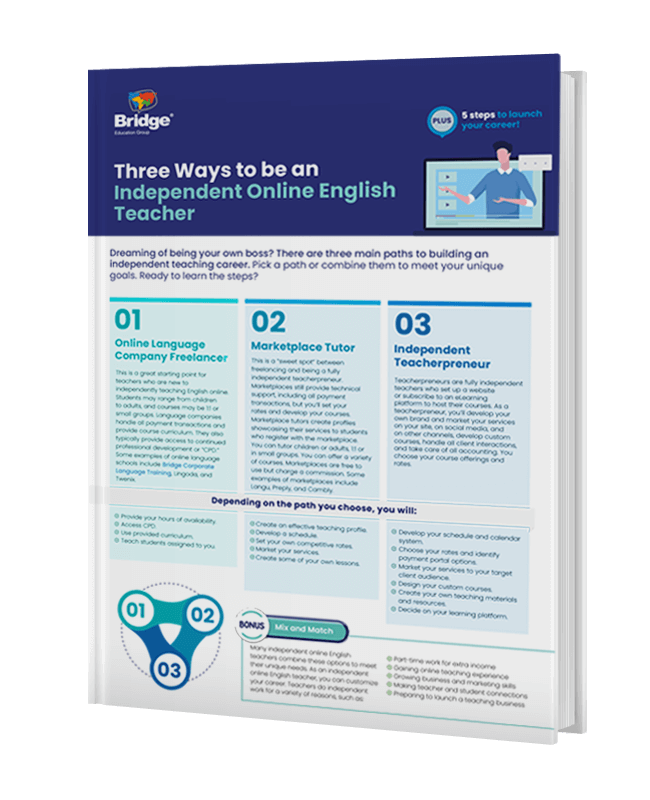
Want to work for yourself? Read the free guide to
Three Ways to Be an Independent Online English Teacher
downloadChoose a niche
Having a teaching specialization, whether through ESL tutoring or online language coaching, can also give independent online English tutors an advantage. Many ESL students have specific English needs, so mentioning your TEFL/TESOL niche in your profile or video will let them know that you’re the tutor they need.
Choosing your area of teaching expertise will depend on your background, interests, and preferences. For instance, you can specialize in teaching kids or teens. You can also become an expert in teaching special subjects like Business English or design your own courses related to specific professions, such as finance or hospitality.
Getting certified shows that you’ve earned the skills for teaching a particular TEFL/TESOL field, which helps highlight your specializations. A wide range of courses can help you build or develop your niche. For example, you can take a Micro-credential course in Teaching English Pronunciation or a Micro-credential course in Teaching IELTS Exam Prep.
Setting a clear rate is also part of marketing yourself well. Research what similar independent teachers charge for your niche and region, then set a rate that reflects your experience and certifications while staying realistic for your target market. State your rate plainly on your profile or website rather than making prospective students ask, since unclear pricing often costs you inquiries before a conversation even starts.
How do I find ESL students through online marketplaces?

Still wondering where to find students for language coaching online? You can also advertise yourself via online ELT marketplaces like Preply, italki, and Cambly if you’re still struggling to find online ESL learners on your own. On these platforms, you simply have to create your online teacher profile, choose your pay rate, and set your schedule.
The marketplace will handle promoting your profile and helping potential students find you on the platform. Whether you’re still working out how to find private students to tutor in English or ready to try a marketplace instead, these platforms can help you get started quickly.
You still have to put together a standout profile when marketing yourself through these teaching portals. Suchismita Dutta, a freelance EFL teacher who has successfully found students on Preply, has these tips to engage more learners: “Every website requires its teachers to post a self-introduction video and mention their teaching skills and methodology. The key to finding students is to create a good self-intro video and present yourself in the best way possible.”
Marketplace teaching can also help you build toward fully independent work. The reviews and teaching hours you accumulate on a platform give you concrete proof of experience to include on your own website or profile later.
Some teachers stay on a marketplace permanently for the consistent supply of new students it provides, while others use it to build an initial client base, then gradually shift toward independent students who found them through other channels, such as referrals, social media, or their own website.
Learning how to find students for online teaching may seem daunting at first, but it’s not impossible, especially if you put in time and effort. The strategies above will help potential students find you easily and fill your booking slots quickly.