Bridge TEFL
  Expert Series Webinars
  BridgeUniverse Blog
  TEFL Jobs
  Language Training
  About Bridge





Bridge grad Rachel Story, from the U.S., became a digital nomad because she wanted to travel and follow world festivals. She launched and grew her own virtual English teaching business as she traveled. Rachel also helped create Bridge’s Teacherpreneur Academy, the course that guides independent teachers as they build their own businesses. She discusses her path to becoming a traveling English teacher and shares her tips for building more freedom and flexibility into teaching English online.
- Hi, Rachel! Can you tell us a bit about yourself?
- How did you decide to become a digital nomad?
- You also created your blog, Grateful Gnomads. What inspired you to start this blog?
- How did you transition from teaching for online language schools to becoming an independent teacherpreneur?
- You previously served as the Teacherpreneur Academy instructor and coach. Why should aspiring independent teachers enroll?
- How do you recommend teachers pace themselves through a self-paced course so they actually finish and act on it?
- What is in the resource library, and which template do teachers reach for first?
- What are some of the common questions or concerns aspiring teacherpreneurs ask?
- What are the top tips you give to aspiring teacherpreneurs?
- You took the Introductory Educator, Teaching Business English, Error Correction, and Teaching IELTS Exam Prep courses. Why did you decide to take these courses?
- How did these courses help you professionally?
- How do you set and raise your rates as an independent teacher?
- What’s your advice for someone who wants to become a digital nomad?
- How do you handle time zones and a schedule that moves with you?
- Can you teach English online while traveling full-time?
- What do you need to become a traveling English teacher?
Hi, Rachel! Can you tell us a bit about yourself?
I come from Johnson City, a small town in Tennessee. I haven’t lived there in a long time, so I give a long-winded answer when someone asks me where I’m from. These days, we have a home base in Puerto Vallarta, Mexico, and we still travel from there for much of the year.
Discover the 10 best places for digital nomads to live, teach English online, and travel.
How did you decide to become a digital nomad?
My husband, Sasha, and I moved to China to teach English in 2010, and we lived there for five years. We then took a gap year: we quit our jobs in Beijing, put all of our stuff into storage, and traveled for 14 months straight. That gap year gave us our first experience of the digital nomad life.
We expected to return to normal life and regular full-time jobs afterward, but two weeks in, we realized how hard it is to give up the freedom that comes with traveling full-time. So we worked for a year in Kunming, China, saved money, and prepared for what came next. We then moved to Bali and lived on the island for about nine months.
I found a job teaching English online while we were living in Bali. We have lived and traveled as digital nomads since 2016, teaching English online and blogging.
You also created your blog, Grateful Gnomads. What inspired you to start this blog?
Our gap year inspired us to start the blog. We started it to document our travels and to keep our friends and family updated on our whereabouts.
Our blog serves new and experienced digital nomads as well as live music lovers. Sasha and I are both huge fans of live music, and we met at a music festival. We write tips and advice for digital nomads, as well as travel guides for live music fans, because we travel to see our favorite bands ourselves.
How did you transition from teaching for online language schools to becoming an independent teacherpreneur?
I started teaching English online with VIPKid and later worked with a few other online language schools for children. For several years, those companies provided a steady stream of students, which made online teaching a reliable way to earn an income while traveling.
After a few years of freelancing with online language schools, I joined Langu, an online teacher marketplace. I gradually built up my profile there, gained regular students and positive reviews, and started teaching more adult learners. Because I was still earning most of my income from the online language schools, I was able to make that transition slowly rather than having to replace all of my students at once.
Over time, I shifted more of my schedule toward Langu and eventually began working with students independently as well. That progression taught me a lot about building a teaching business: how to attract and retain students, set rates, manage my schedule, communicate my value, and rely less on a single company or platform for income.
Becoming an independent teacherpreneur wasn’t something that happened overnight. It was a gradual process of moving from having companies provide my students to taking more ownership over how, when, and whom I taught.
Learn ways to stand out on English teacher marketplaces.
You previously served as the Teacherpreneur Academy instructor and coach. Why should aspiring independent teachers enroll?
The Teacherpreneur Academy is designed for any online English teacher who wants to become an independent teacherpreneur or expand an existing independent teaching business. It works for teachers of any experience level, and it takes you from point A to point Z of the whole process.
Teachers who are just starting out develop an entrepreneurial mindset, choose a teaching niche, and build a business plan. Teachers who are already established find the tools and strategies they need to scale. Everyone learns how to pivot and develop smart business practices along the way.
The course is now fully self-paced, so you can move through it on your own schedule. The workshops I created are all recorded and available on demand in the workshop library, and every template and tool sits in the resource library. Both libraries come with the course. You also get an invitation to our LinkedIn group, the Bridge Independent Teaching Community, where independent teachers connect, share advice, and support one another.
How do you recommend teachers pace themselves through a self-paced course so they actually finish and act on it?
I think the biggest mistake people make with a self-paced course is feeling like they need to get through all of the content as quickly as possible. With something like the Teacherpreneur Academy, the goal isn’t just to finish the course. It’s to actually put what you’re learning into practice.
I’d recommend that teachers:
-
Set aside a regular block of time each week and work through the course one section at a time.
-
Use the worksheets and templates in the resource library as you go.
-
Stop and take action along the way. If you’re learning about choosing a niche, take the time to work through the niche-selection or market research resources before moving on. If you’re working on your offer, actually start planning your product and pricing.
You don’t need to have your entire teaching business figured out before you start. Taking small, consistent steps and applying what you learn as you go is much more valuable than racing through the course just to finish it.
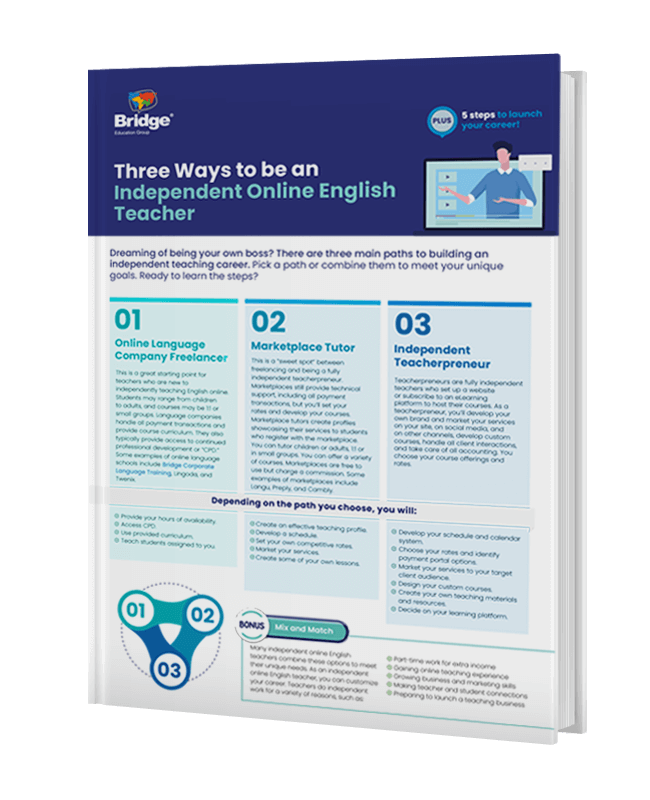
Want to work for yourself? Read the free guide to
Three Ways to Be an Independent Online English Teacher
downloadWhat is in the resource library, and which template do teachers reach for first?
The resource library includes practical guides, worksheets, and templates that help teachers apply what they’re learning in the Teacherpreneur Academy to their own businesses. It covers:
-
goal setting
-
market research
-
choosing a niche
-
defining your unique selling proposition
-
planning your product
-
pricing
-
creating your ideal customer profile
-
improving your teacher profile
-
having sales conversations, and more
I’d recommend starting with The Teacherpreneur’s Roadmap to Success because it helps you look at the bigger picture and think through the different pieces of building an independent teaching business. From there, you can use the resources that match what you’re working on in the course.
For example, if you’re trying to attract students, the library has resources on optimizing your LinkedIn profile, building rapport, and having effective sales conversations. LinkedIn can be a great place for independent teachers to connect with potential students and generate leads, especially if they teach professionals or specialize in areas like Business English.
The idea isn’t to work through every resource at once. The resources are there so you can choose the tool that helps you take the next step in your business.
What are some of the common questions or concerns aspiring teacherpreneurs ask?
I hear the most questions and concerns about getting started and finding a niche. Many teachers get stuck on those questions at the beginning and feel overwhelmed, and I felt the same way myself.
Still in doubt about becoming an independent English teacher? Here are a few reasons why you should.
What are the top tips you give to aspiring teacherpreneurs?
-
Begin by teaching with an online language school or tutoring for an online marketplace. That first step puts you into action, and action builds the motivation that keeps you going when you come to something challenging. Once you’re teaching independently, you feel the excitement and fulfillment that comes with helping students learn and grow.
-
Work as an independent teacher or marketplace tutor to give yourself space to figure things out. You discover the types of students you genuinely enjoy working with, and you uncover your own teaching style. You can test different approaches until you find the one that fits you best.
-
That trial-and-error phase helps you immensely with choosing your niche and learning how to market yourself effectively. You get a clearer picture of your strengths, what sets you apart, and how to highlight them in your business.
-
We have lessons and resources to help you start teaching independently or tutoring. You don’t have to launch a full business right away.
You took the Introductory Educator, Teaching Business English, Error Correction, and Teaching IELTS Exam Prep courses. Why did you decide to take these courses?
I earned my initial online TEFL certification from Bridge while I was living in China. Bridge later introduced the Specialized Certification and Micro-credential courses, and those excited me because continuing your professional development as an ESL teacher really matters. I had always wanted to teach Business English and IELTS test prep, so I took those two courses. I then took the Error Correction Micro-credential course to become a better teacher, because error correction is one of the more difficult areas of teaching English.
I took these courses for the following reasons:
-
To have niches as a teacher and offer more specialized lessons.
-
To set myself apart from other online English teachers so I could raise my rates.
-
To launch a teacherpreneur business and stop working with companies.
Learn how you can start teaching IELTS exam prep.
How did these courses help you professionally?
I learned how to teach Business English. I minored in business at university, but learning the basics of business yourself differs completely from teaching Business English to someone who is still learning the language. The Business English course showed me how to teach those skills well.
The Teaching IELTS Exam Prep Micro-credential taught me more about the exam and showed me how to set my students up for success on the IELTS.
How do you set and raise your rates as an independent teacher?
Independent teaching gives you much more control over your rates, but figuring out what to charge can feel intimidating at first.
I think it helps to look at your experience, qualifications, niche, the students you serve, and the value of what you’re offering. You also don’t have to come up with the perfect rate on day one. When I transitioned into independent teaching, I had already taught through a company and an online teacher marketplace, so I had experience and student feedback that helped me understand the value I was providing.
As you gain experience, specialize, and build demand for your services, you can gradually raise your rates. Professional development can also help you differentiate yourself. One of the reasons I pursued additional training in areas like Business English and IELTS was to develop more specialized offerings, set myself apart from other teachers, and eventually charge more for my services.
Learn how to manage cash flow as an independent English teacher.
What’s your advice for someone who wants to become a digital nomad?
1. Be adaptable.
Anything can change at any time, so you always need a backup plan.
2. Don’t be afraid to experiment and try different things.
Test different options and keep the ones that work. That approach applies to anything. For teaching English online, work with a variety of platforms before you launch your own business.
Teachers have three ways to teach English online:
-
Working with a language company that sets the rates and provides the curriculum.
-
Tutoring for an online teacher marketplace that handles marketing while you set your rates and plan your lessons.
-
Being a teacherpreneur and setting your rates, doing your marketing, and creating your lessons for your own online English teaching business.
3. If you’re just getting started, it helps to begin your independent journey by teaching with companies.
Apply to as many different companies as you qualify to teach with, and go from there. Figure out what you like, and keep doing more of that.
How do you handle time zones and a schedule that moves with you?
Time zones are one of the trickier parts of teaching online while traveling. You have to think not only about where you are now, but also about where your students are and where you’re going next.
When I’m planning travel, I always look at the time difference before committing to my schedule. Sometimes a class that happens at a perfectly reasonable time in one country becomes very early in the morning or late at night in another.
It also helps not to move too quickly. Staying somewhere for a few weeks or months makes it much easier to maintain a routine than changing locations every few days. That is part of why we set up a home base in Puerto Vallarta, Mexico. Traveling from there gives us more stability while still letting us move around quite a bit.
Flexibility and planning both matter. You have to build a schedule that works for your students and also makes sense for the lifestyle you’re trying to create.
Curious about this lifestyle? Find out more about the rise of the digital nomad teacher.
Can you teach English online while traveling full-time?
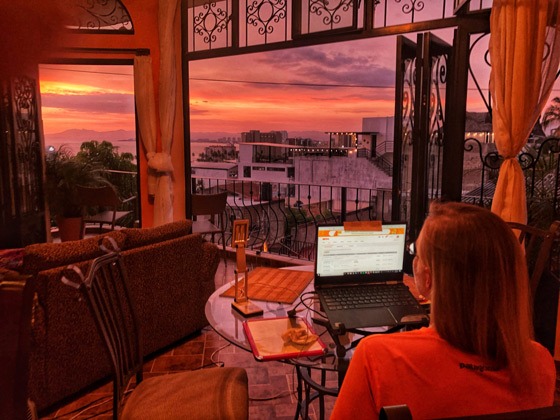
Absolutely. I did it for years. I started teaching English online while we were living in Bali, and my husband and I have been digital nomads since 2016.
That said, working remotely while traveling is not the same as being on vacation. You still have students expecting you to show up for class, so you need to plan your travel around your work commitments. Reliable internet, a quiet place to teach, and enough time in one location to establish a routine make a huge difference.
I also think it gets easier when you allow yourself to travel more slowly. You don’t have to move to a new city every three days to be a digital nomad. Staying somewhere longer lets you explore while still having some structure in your workweek.
Setting up your teaching practice? Online ESL teachers share their favorite tech tools.
What do you need to become a traveling English teacher?
From a practical standpoint, you need the right qualifications for the type of teaching you want to do, a reliable computer, a good headset, strong internet, and a professional environment where you can teach. I always recommend having backup options for internet as well, because things can go wrong when you’re traveling.
But I think adaptability is just as important as the equipment. Travel plans change. Wi-Fi stops working. Time zones shift. A place that looked quiet when you booked it turns out to be next to a construction site. You have to be willing to problem-solve.
I’d also recommend getting some online teaching experience before trying to build an entire independent business while traveling. I started with VIPKid, then moved into teaching through an online teacher marketplace, and eventually built my own independent teaching business. Each step helped me learn what kinds of students I enjoyed teaching, what I wanted to specialize in, and how I wanted my business to work.
You don’t have to have everything figured out before you start. Get qualified, start teaching, experiment with different options, and build from there.