Bridge TEFL
  Expert Series Webinars
  BridgeUniverse Blog
  TEFL Jobs
  Language Training
  About Bridge



You have been researching TEFL certification, and you have also been seeing the term TESOL. So, what is TESOL in education? What is a TESOL certificate? Is a TEFL certification the same as a TESOL one? The short answer is that the terms TEFL and TESOL usually function interchangeably for English teaching certification, even though the meaning includes a subtle distinction.
We can break it down with an in-depth exploration of the most frequently asked questions about TESOL certification, from definitions and course types to what you can do with TESOL certification. With this knowledge, you can make informed choices and carve out a personalized career path.
- Is TEFL the same as TESOL?
- Is TESOL better than TEFL?
- What does TEFL stand for?
- What does TESOL stand for?
- What is TESOL certification good for?
- What are the requirements for TESOL certification?
- How to get a TESOL certificate?
- What is a TESOL course?
- How much does it cost to get a TESOL certificate?
- Is a TESOL certificate worth it?
- How long does it take to get a TESOL certificate?
- How long does TESOL certification last?
- Should my TESOL course provider be accredited?
- What will I learn in a TESOL certification course?
- After completing my TESOL certification, how can I gain teaching experience?
- How would a TESOL course benefit me?
- What are my career prospects with TESOL certification?
Is TEFL the same as TESOL?
These two acronyms function as umbrella terms for training courses that prepare English language teachers, and providers offer these courses online, in person, or as a blend of both. Although these terms technically carry somewhat different meanings, employers and course providers generally use TEFL and TESOL interchangeably for certification and hiring. In fact, you may even see providers describe online TEFL courses as “TEFL/TESOL courses” while you shop around. Similarly, schools that hire teachers usually make no distinction between the two. For example, you might see a teaching job ad that requires “TEFL/TESOL certification”.
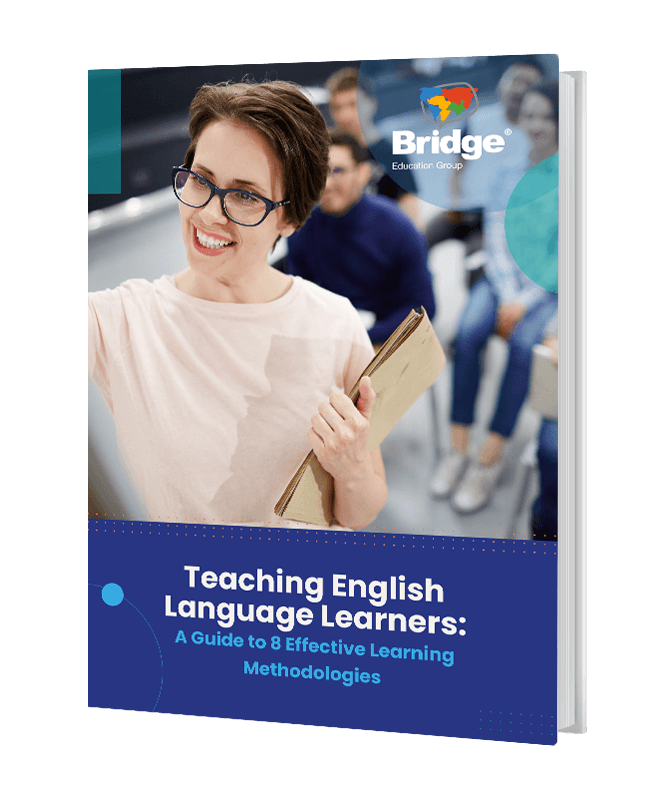
Learn about 8 ESL methodologies and get sample activities with the free guide to
Teaching English Learners: Popular ESL Learning Methodologies
downloadIs TESOL better than TEFL?
In the context of getting certified and applying to jobs, the two terms do not reflect a better or worse option, because people commonly use both terms to describe the same certification. Yet, despite the fact that most TEFL providers, language schools, and online teaching companies use the terms interchangeably, the two acronyms still include subtle differences. So, what is the difference between TESOL and TEFL? We can take a deeper look at these acronyms to explain.
Find out how to choose the best TEFL certification for your needs.
What does TEFL stand for?
TEFL stands for Teaching English as a Foreign Language. TEFL refers to teaching English in a country where English is not a primary language (rather, it is a foreign language). For example, TEFL could include a teacher from the U.S. who teaches English in Taiwan.

What does TESOL stand for?
TESOL stands for Teaching English to Speakers of Other Languages. Does that sound more general? It is. TESOL includes teaching English as a foreign language (such as in the Taiwan example), and TESOL also includes teaching English as a second language (TESL), meaning in a country where the primary language is English. For example, TESL could include a teacher at an English language institute in the U.S. who teaches students from around the world. A teacher like this would have TESL certification.
You should keep one important point in mind: people often use these two terms interchangeably, even though there is a technical distinction, so either a TEFL or TESOL certificate program will meet certification requirements for teaching English. One exception involves university-level studies. For example, if you decided to pursue a degree in teaching English, you would earn a bachelor’s or master’s degree in TESOL, not TEFL.
What is TESOL certification good for?
TESOL certification, like its equivalent, TEFL certification, gives you what you need if you plan to become an EFL or ESL instructor in a traditional classroom or online. You will see this requirement listed in TEFL job postings for online teaching companies, English language schools, and other institutes around the world that hire English teachers. Usually, a 120-hour TEFL/ TESOL certificate online or in person meets the minimum standard for qualifying for these types of jobs.
If you’re not sure whether you’d like to teach English online, abroad, or some combination of the two, you can opt for a course like the Bridge 240-hour Master Certificate + Teaching English Online Certification Bundle. This comprehensive course qualifies you for both online and global jobs.
Meanwhile, you can also take TEFL/TESOL courses for various specializations. For example, you can help ESL learners prepare for English proficiency exams like the Pearson Test of English (PTE) or the IELTS. You can get TEFL/TESOL training tailored to these niches, such as Micro-credentials in Teaching PTE Test Prep and Teaching IELTS Exam Prep.
Bridge alum Shella teaches at an international school in Taiwan. “I teach grade two international class and the grade three bilingual class,” she said. “I teach math and language arts to grade two and science [to grade three].”
She completed the 60-hour Teaching English to Young Learners Specialized Certification. “I learned a lot in the course,” she said. “It gave me a wider perspective on how I teach. And as I’m multilingual, it’s easier.”
Want to teach English online? Here are the steps to get your career off the ground.
What are the requirements for TESOL certification?
For most online or in-person TESOL courses, you only need an English language level that allows you to succeed in the course. For non-native English speakers, the recommended level for certification usually ranges from a B2 to C2 CEFR level (CEFR is the Common European Framework of Reference, an internationally used standard for describing language ability level).
Each TESOL/TEFL provider uses its own guidelines for the required English level, and the required level can vary somewhat depending on the academic rigor of the course. For most of Bridge’s professional certification courses, you will need a B1 CEFR level. You can find details on certification prerequisites for additional courses in these TEFL/TESOL FAQs.
For the most part, TEFL/TESOL certification requires English language proficiency and little else. You don’t need a college degree, and you don’t need technical expertise to take an online certification. That being said, some TEFL/TESOL programs operate at a more advanced level, and some programs even offer university-level credits, so these programs may have additional requirements beyond language level, such as a minimum education (a high school or university diploma).
How to get a TESOL certificate?
You can get a TESOL certificate online – the most common way – or you can complete in-person courses. Online TESOL courses come in a range of hours, such as 40, 60, 100, 120, or 150, and these courses usually provide the flexibility to complete coursework when it’s convenient for you. A 40-hour or 60-hour course will typically offer an introductory option that provides basic training in TESOL. Most employers require a minimum 120-hour TESOL certification, so a course such as the Bridge 120-hour Master TEFL Certificate will prepare you well and meet or exceed certification requirements for a variety of ESL/EFL jobs around the world.
What is a TESOL course?
A TESOL course prepares educators to teach English to non-native speakers. TESOL certification is required to teach English in a traditional classroom or online. It will also generally meet requirements for teaching English abroad, at many private schools, and with language academies.
A TESOL course provides training in ELT theories and teaching methodologies, classroom management, lesson planning, and more. Specialized TESOL courses provide targeted training in specific skills like teaching grammar or ELT niches like teaching English test prep.
How much does it cost to get a TESOL certificate?
The cost of TEFL/TESOL certification courses varies depending on different factors, such as whether you take an online or in-person course, the number of hours of certification, whether the course includes tutor interaction, and the level of the course. You can expect to pay about $200 USD for a very minimal online TESOL certification (of about 40 hours) and closer to $400-500 USD for an online certification of 100 hours or more. If you opt for university-level online training or a classroom-based TESOL course, the tuition can be substantially higher – usually between $1,000 to $2,500 USD.

Is a TESOL certificate worth it?
Many TESOL certificate programs exist, but a certification that meets the typical job requirement of 120 hours will qualify you for jobs around the world and open opportunities to teach English abroad, teach English as a digital nomad, or teach English online. Whether you teach for a school, freelance for an online company, or launch your own business as a teacherpreneur, TESOL certification will help you meet qualification requirements and showcase your expertise.
Roberta Serralvo teaches in person at a private elementary school, online for Bridge Corporate Language Learning, and online independently, tutoring English test prep. She completed the Teaching Business English Specialized Certification and shared how helpful it was for discovering teaching materials and gaining new perspectives.
“When you have to deal with the stakeholders, it is a different approach, from presenting grades to being flexible with students,” she said. “The specialized course opened my eyes to working with companies. I’m not only dealing with the student; I’m also dealing with a company that’s investing in its employees.”
How long does it take to get a TESOL certificate?
It usually takes between one to three months to complete a self-paced online TESOL course. The timeline depends on the number of hours in the course (ranging from 40 to more than 150 hours) and on how much time you can dedicate to the course each week. Most people choose a TEFL/TESOL course of 120 hours to qualify for most teaching jobs, and this type usually takes about six weeks to complete when you work on it part-time.
Classroom-based TESOL courses, on the other hand, are almost always four weeks long since they are intensive, full-time training.
How long does TESOL certification last?
TESOL certification does not expire; once you receive your TESOL certificate, it lasts a lifetime. Some teachers continue building on their initial certification to qualify for more jobs by upgrading their course to add more hours of training or by earning a Specialized TEFL/TESOL Certificate in a high-demand teaching area, such as teaching English online or teaching young learners, or a shorter TEFL/TESOL Micro-credential course certificate in a current ESL topic, such as Teaching English Using Podcasts.
Find out what comes next after you complete your TEFL/TESOL certification course.
Should my TESOL course provider be accredited?
When you choose where to take TESOL courses, you should make sure the program you choose is accredited, because no industry-wide requirement exists that accredits TEFL/TESOL providers and their courses. So, not all course providers are accredited.
Accreditation is the recognition and verification that an institution meets and maintains certain standards of quality for that industry. An outside, objective agency audits various aspects of the organization and its programs and awards accreditation if the standards are met. Accreditation review is ongoing, so organizations must be committed to maintaining those standards to remain accredited.
There are several important reasons you should choose an accredited TEFL/TESOL program.
-
First, it will help you find high-quality courses.
-
Second, courses from an accredited organization show future employers that you’ve received good training that meets industry standards.
-
Third, accreditation through a reputable body like ACCET means you can earn additional credentials, such as Continuing Education Units (CEUs) or even university credit for your training.
Who are the accrediting bodies for Bridge’s TESOL certification programs?
Bridge is accredited by ACCET, the Accrediting Council for Continuing Education and Training, AQUEDUTO, the Association for Quality Education & Online Training, and ACE, the American Council on Education. These accreditations mean you can earn CEUs, undergraduate-level credits, and graduate-level credits when taking select Bridge courses.
Affiliated university partners in the U.S. and abroad provide opportunities for joint TEFL certification, scholarships, university credits, and pathways to graduate-level degrees.

Begin your ELT journey or take the next step in your career with
Accredited Online TEFL/TESOL Certification
Explore CoursesWhat will I learn in a TESOL certification course?
An online TESOL course typically uses modules that you complete at your own pace. The time needed to complete all modules depends on the number of TESOL training hours in the course, but the online format appeals to many people since they can complete coursework around a job or other commitments.
A professional certification course such as the Bridge 120-hour Master Certificate provides comprehensive teacher training, including modules on language acquisition theory, EFL methodologies, classroom management, lesson planning, and teaching specific topics like vocabulary and grammar, as well as job-advising modules. A good TESOL course includes interactive content, access to resources, and tutor access for questions and feedback.
A specialized TESOL certification course focuses on specific ELT skills and niches. These courses can range from 10 – 60 hours or more. For example, Bridge offers targeted 10-hour Micro-credential courses in 21st-century teaching skills, such as Promoting Critical Thinking Skills in Your Classroom and Instilling Confidence and Leadership in Your Learners. Bridge also offers 60-hour Specialized Certification courses, such as Teaching English to Teenagers and CLIL Methodology.
Explor targeted training through Bridge’s Micro-credentials.
After completing my TESOL certification, how can I gain teaching experience?
Many teaching jobs require, or at least prefer, experience, so you should get hands-on experience in the classroom. You can gain experience in a few ways, and these options can help you qualify for more jobs and prepare you to teach your own classes. Here are some ways to gain experience.
Complete a guided teaching practicum
You can earn certain types of TEFL/TESOL certifications that provide valuable teaching experience. For example, Bridge offers a specialized certificate called the Guided Teaching Practicum that incorporates five hours of hands-on teaching practice in a real EFL classroom, which you can arrange with schools, community centers, or other locations.
You can combine a TEFL/TESOL practicum course with any online TEFL certification (Bridge or otherwise) to make yourself more competitive for EFL jobs across the globe.
Teach English online
You can look for online English teaching companies or marketplaces that don’t require prior experience, or you can enroll in a program like Bridge’s Practicum in Teaching English Online. You’ll gain experience teaching in an actual virtual classroom and come away with recorded lessons (of your teaching) that you can showcase to potential employers.
Volunteer teaching
You may find volunteer opportunities within your community or through a teach-abroad volunteer program. Some ways you can gain experience as a volunteer teacher, teaching assistant, or tutor include:
-
Refugee/immigrant service organizations
-
Local churches or community centers that offer ESL or even GED classes
-
Teaching English online with a volunteer organization
-
Public or private K-12 schools
-
English language schools
-
Nanny/babysitter/coach/mentor to get experience with kids
How would a TESOL course benefit me?
TESOL certification courses from an accredited provider benefit new and experienced teachers in a variety of ways. If you’re new to ELT, a TESOL certification can get you started in your new career as an English teacher in a classroom, online, or abroad. If you’re an experienced English teacher, specialized TESOL certifications can help you break into lucrative, in-demand niches, open doors to new opportunities, and increase your earning potential.
For example, Belinda, a Teacherpreneur Academy member who is building an online teaching business, recently completed this teacherpreneur course as part of her training.
“The course was wonderful and had all the tools I needed to get started,” she said. “I have learned so much about funnel sales, social media, marketing, etc. The list is endless. This program is worth its value. I’m glad I enrolled in it!”

What are my career prospects with TESOL certification?
Having a TESOL certification can open doors to many different career opportunities. These opportunities include teaching positions at public and private schools, abroad, and online, which can include launching your own business as a teacherpreneur. Let’s break these career opportunities down in more detail.
Teach English in a traditional classroom
You can teach English in public and private schools, at language institutes, and through a variety of programs, both close to home and abroad. Qualification requirements may vary by country and region, but at a minimum, a 120-hour TEFL/TESOL certification is required.
While some countries may require a degree, there are many places you can teach English abroad without a degree. For example, it’s possible to teach English in Spain, Romania, Argentina, Mexico, and Laos without a degree.
Teach English online as a freelancer
Teaching English online as a freelancer with a company may include teaching young learners, teens, or adults, who are often business professionals. For example, Bridge Corporate Language Learning partners with companies worldwide to deliver Business English courses to employees.
To teach with a company, you’ll need to be TEFL/TESOL certified, typically with at least 120 hours of training. You can start with a professional certification like the Bridge 120-Hour Master TEFL Certificate or the 150-hour graduate-level IDELTOnline™. If you plan to teach online, you’ll want to add a Teaching English Online Specialized Certification, and if you plan to teach business professionals, you’ll want to add a Teaching Business English Specialized Certification.
Not sure about teaching Business English? Learn why you should and how it can boost your career.
Teach English online through a marketplace
If you’re looking for a side gig for additional income or simply want the freedom to choose your own students and hours, you can also pursue a career teaching English on online marketplaces, platforms that handle financial transactions but take a cut of your profits. You can tutor children or adults on marketplaces, and you can offer one-to-one or small-group tutoring.
You can also specialize your teaching niche with additional certifications, which can allow you to charge higher rates for tutoring sessions. For example, you may choose to specialize in teaching English pronunciation or teaching TOEFL test prep, which are in-demand courses. To tutor on a marketplace, you’ll need to set up an eye-catching profile that includes:
-
a profile picture
-
a strong bio
-
a summary of your qualifications and experience
-
your areas of specialization/teaching niches
-
an introductory video
-
your resume

Teach English online as a teacherpreneur
As a teacherpreneur, you can create your own online teaching business and choose your own rates, course offerings, hours, and fees. Teacherpreneurs are fully independent teachers who set up their own websites or subscribe to a learning platform to offer their services. For teachers with an entrepreneurial spirit, starting an independent online business offers amazing opportunities.
As a teacherpreneur, you would develop your own brand and market your services on your site, social media, and other channels. You would also handle all client interactions, manage billing and accounting, and develop your own custom courses. Bridge’s Teacherpreneur Academy provides business and marketing training through the 60-hour course, monthly workshops, monthly networking and live coaching sessions, and other resources to empower new and experienced English teacherpreneurs.
At the end of the day, TESOL courses provide a vast array of opportunities for teaching English. With the right certifications, you can teach young children, teens, or adults. You can teach in schools or online, close to home or abroad, part-time or full-time. You can pursue a career with schools or companies, tutor for online marketplaces, or launch your own successful teaching business. The bottom line is that TESOL certification puts you in the driver’s seat so you can create the career path of your dreams!