
 Bridge TEFL
  Expert Series Webinars
  BridgeUniverse Blog
  TEFL Jobs
  Language Training
  About Bridge




People sometimes overlook professional development for ESL teachers, but it matters. Whether you want a new position or you want to move ahead at your current job, ESL professional development can help you stand out to employers as someone who stays on top of trends in education and values lifelong learning. To make your resume shine, we will share nine professional development opportunities, such as earning specialized TEFL/TESOL certificates, attending ELT webinars, and applying for TEFL/TESOL fellowships.
- What is meant by professional development for ESL teachers?
- Why is professional development important for ESL teachers?
- What are some examples of professional development for ESL teachers?
- 1. Earn TEFL/TESOL certification of at least 120 hours
- 2. Tune in to ELT webinars to expand your knowledge
- 3. Specialize your training/certification
- 4. Showcase your achievements with digital badges
- 5. Attend or present workshops at your school or virtually
- 6. Connect with ESL peers and influencers
- 7. Attend virtual or in-person TEFL/TESOL conferences
- 8. Apply for a TEFL/TESOL fellowship or grant
- 9. Get your master’s in TESOL
What is meant by professional development for ESL teachers?
Professional development refers to learning that improves one’s capability, expertise, and knowledge in a certain job or career field. This learning often involves earning or maintaining certain credentials through academic certifications and coursework, but it can also involve informal learning opportunities, such as peer groups or conferences.
For example, ESL professional development can involve a TEFL/TESOL-certified, experienced teacher taking a specialized course to learn a new skill, such as teaching English online, or attending an online webinar or a conference to stay on top of the latest methods of teaching English.

Why is professional development important for ESL teachers?
Professional development for EFL teachers provides opportunities for both in-person and online English teachers to stand out among other professionals in this highly competitive field. It can improve your chances as an applicant and it can help you advance in your current job.
Furthermore, TEFL/TESOL professional development matters if you want to become a better and more successful teacher. Without professional development opportunities, teachers can become stagnant in their teaching practices and in their EFL careers.

What are some examples of professional development for ESL teachers?
ESL professional development offers countless opportunities. Below are nine of the best ways you can take part in this kind of ongoing learning, and all of them will give your resume a boost and provide talking points for your next TEFL/TESOL job interview.
1. Earn TEFL/TESOL certification of at least 120 hours
If you do not already hold an internationally recognized TEFL certification, you can earn this credential and open doors to a wider range of teaching opportunities worldwide and online. Most reputable employers require a certification of at least 120 hours, so if your current certificate is fewer hours than that, you can upgrade it to meet this international standard and access more opportunities, as there are various types of TEFL/TESOL jobs you can get with a TEFL/TESOL certificate. You can also teach English online with a company or for yourself.
If you are considering making a long-term career out of teaching English, want to stand out from other teachers, or want to qualify for non-teaching EFL jobs (like language school director, teacher trainer, or curriculum designer), you can take a more advanced course like the IDELTOnline™. This graduate-level certification offers 15 Continuing Education Units (CEUs) and it offers up to nine college credits if you want to pursue an MA TESOL.
Even if you are already a teacher, you should get TEFL/TESOL certified to advance your career. Fortunately, you can choose earning a TEFL/TESOL certificate online, so you can take this step no matter where in the world you are located!
Already a teacher? Here’s why you should still get TEFL/TESOL certified.
2. Tune in to ELT webinars to expand your knowledge
When you attend live webinars like the Bridge Expert Series, you can connect with other educators and leaders in the ELT industry. You can stay up to date with the latest ELT news and teaching methods, and you can engage with a global community. Industry expert panelists join Expert Series Moderator Alecsander Piazza in interactive discussions of ELT topics, and attendees ask questions and share information and insights as well.

Participants can register to attend the live webinars, or they can join the Expert Series community and access a library of 75+ on-demand webinars. Webinars are organized in learning paths that include:
Attendees can earn a Certificate of Attendance for each completed webinar, and this certificate provides a tangible resource for teachers who want to boost their resume, market their independent teaching qualifications, or advance in their current teaching position.
Learn more about the Bridge Expert Series and the benefits of TEFL/TESOL webinars.

Unlock an extensive library of ELT webinars and earn professional development certificates
Bridge Expert Series
Join Our Community3. Specialize your training/certification
If you are already TEFL/TESOL certified, you can take specialized courses and enhance your resume by showing employers that you go above and beyond and value continuous professional development.
Specialized Certificates
Teachers can specialize in high-demand areas, such as teaching young learners or teens or teaching Business English, to qualify for more diverse jobs and be better prepared for the classroom. Specialized training also provides opportunities for experienced teachers to expand into new and growing TEFL/TESOL niches, such as teaching English online or using Content and Language Integrated Learning (CLIL), a bilingual education method that is growing in popularity all around the globe.
Teachers pursuing careers as independent English teachers can complete Bridge’s Teacherpreneur Academy. Academy members learn the essential skills in marketing and business for an independent teaching business, and attend monthly workshops and interactive info sessions. Members also gain access to a library of resources and a global network of teacherpreneurs.
Micro-credentials
You can take professional development courses through Bridge via TEFL/TESOL Micro-credentials. These are short, targeted courses that cover practical and current topics in English language teaching, and you can take as many as you like. Teachers can take courses to learn effective strategies to teach English pronunciation and error correction in the EFL classroom, and they can train to teach English proficiency test prep. Bridge also offers tutor support in Micro-credential courses, and you earn a verifiable certificate and digital badge upon completion.
Available Micro-credential courses include the following, and Bridge adds more on a continual basis:
Methodology & Core Teaching Skills
Teaching Test/ Exam Prep
Teaching English Online:
21st-Century Teaching Skills:
4. Showcase your achievements with digital badges
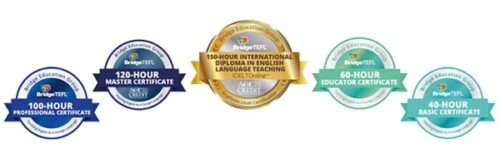
When you complete an online TEFL certification course or specialized certificate with Bridge, you receive a digital badge that allows you to highlight your achievement. Add digital badges to your resume or LinkedIn profile to showcase your professional development. These stackable, shareable digital credentials provide employers with the full scope of the program you completed with just one click.
Map out your unique career path with the free guide to
Self-Guided Professional Development in ELT
download5. Attend or present workshops at your school or virtually
You can team up with colleagues and identify areas in your teaching methods or your school that could use improvement, such as handling challenging students online. Then, you can host a workshop on the specific skill set that needs to be addressed. Workshops can be held in person or virtually via platforms such as Zoom.
You can schedule these professional development workshops on a monthly or bi-monthly basis. Teachers can take turns presenting, or you can host a roundtable discussion instead. Consider incorporating peer evaluations or self-reflective practices like journaling into your workshops, and provide teachers with an opportunity to share the areas in which they excel and in which they need to improve. That way, you will never run out of workshop topics to cover!
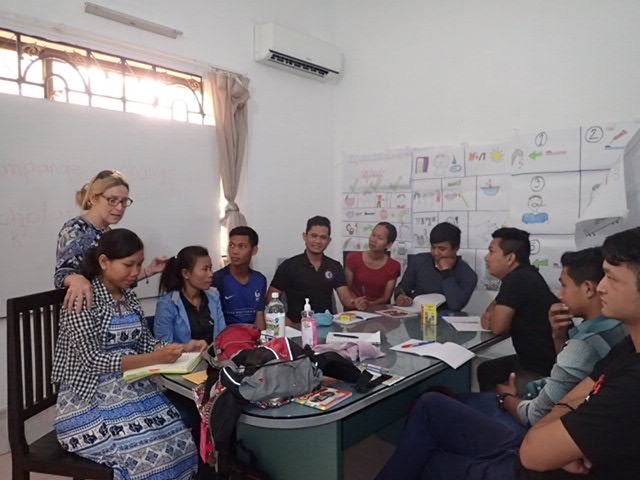
Learn more about reflective teaching practices and why they matter.
6. Connect with ESL peers and influencers
You can connect with ESL peers or other experts in the field in various ways. Try joining an interactive TEFL/TESOL training course, such as the IDELTOnline™, with an international cohort of trainees, and share ideas with other teachers through online forums, discussion threads, and collaborative projects.
You can also join EFL/ESL groups on social media sites like Facebook. These groups provide teaching support and allow you to discuss ESL teaching methods and ideas with other professionals. Some groups focus on specific topics, such as lesson planning, and help teachers grow in specialized areas. Others, such as the Bridge TEFL/TESOL Jobs Facebook Group, focus on job searching.
You can also connect with ESL peers through networking events, like conferences. Use these opportunities to attend information sessions, share ideas, and learn from experts in the industry.
Join the Bridge Teaching English Online Facebook Group to connect with teachers around the world.
7. Attend virtual or in-person TEFL/TESOL conferences
When you attend TEFL/TESOL conferences, you can continue your EFL professional development. Teachers can find many annual regional, national, and international conferences, and teachers can find many virtual conferences as well.
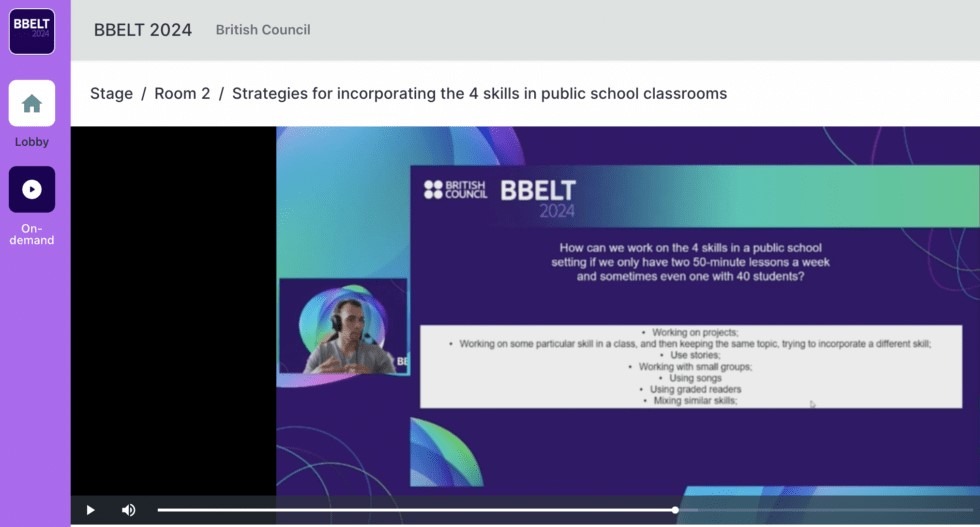
Teachers can attend many annual conferences in person or virtually, such as the TESOL International Conferences, the annual BBELT Conference, the International Applied Linguistics & Language Teaching (ALLT) Conference, the IATEFL International Conference, and others. Conferences like these offer ESL teachers opportunities to network and hear from industry leaders. Plus, attending an empowering TEFL/TESOL conference shows employers your continued interest in professional development and your involvement in the EFL community.
-
Pro Tip: If you miss out on a TEFL/TESOL conference opportunity, check for post-conference deals. Sometimes, you can purchase post-access passes that include recordings of all of the sessions and other resources.
[tribe_events]
8. Apply for a TEFL/TESOL fellowship or grant
When you apply for a teaching fellowship or research grant in an ESL-related field, you can give your career a huge boost in terms of making you more marketable and providing you with invaluable teaching experience.
National programs, such as the U.S. Department of State’s English Language Fellow Program, are competitive, and acceptance into one of these teaching programs looks great on your resume. If you would rather focus on a research project for a specific ESL topic, try searching your government’s education site for grants. Most countries have a decent budget for awarding grant money to teachers for ESL projects, and having specialized, government-funded research under your belt will set you apart from other English language teaching professionals.

Oluyemisi Adebola Oladejo, an English teacher from Nigeria who won the 2022 ETS TOEFL® English-language Researcher/Practitioner Grant said:
“This prize has given me visibility and cast the spotlight on me. There is a tremendous increase in my LinkedIn profile views and connection requests. For once, it seems the world is looking in my direction, and a lot of people are genuinely interested in what I do in the low-income community secondary school ‘somewhere in Africa.’ Since this win, I have had the privilege of telling my story on some international platforms. Just last week, I was a panelist on the TESOL Black History Month Webinar.”
9. Get your master’s in TESOL
This one may not be as easy as getting a specialized TEFL/TESOL certificate, but if you are thinking of making teaching a career, you should consider getting your master’s in TESOL. An MA TESOL opens up the most competitive job opportunities and qualifies you to teach at a higher level, like at a university. MA TESOL jobs are diverse and include opportunities as an academic advisor or a materials writer.
If you are not ready to commit to a master’s program right now or you want to explore other options, you can consider ESL continuing education classes or certifications like the Bridge IDELTOnline™, which you can take as a pathway to graduate study at Bridge partner universities.
When you train and participate in English language teachers’ professional development opportunities, such as attending webinars or completing specializations, you become a better teacher. However, these opportunities also play a key role in enhancing your TEFL/TESOL resume and standing out in a competitive job market.
